


In the wave of digital campus construction, traditional paper ID cards or magnetic stripe cards are being rapidly replaced by more intelligent and secure radio frequency identification technology. As the core carrier of modern campus management, the campus ID card is no longer just a plastic piece of paper displaying student identity. It has evolved into a multifunctional platform integrating identity verification, financial payment, and resource management.
How It Works in Campus ID Card Systems
A standard RFID chip card typically consists of a chip and an antenna. The chip stores the user's identity information, access control data, and relevant application data, while the antenna is responsible for signal reception and transmission. When a user uses their campus ID card to pass through access control or make a payment, the system can complete identification and verification within milliseconds.
This contactless identification method makes RFID chip cards exhibit extremely high stability and efficiency in high-frequency usage scenarios. Furthermore, compared to traditional magnetic stripe cards or contact IC cards, campus ID cards are more durable during use, reducing wear and tear from physical contact.
Key Functions of RFID Chip Campus ID Cards
Access Control and Campus Security
Campus security is a top priority for educational institutions. Traditional key management is not only inefficient but also highly susceptible to loss. By deploying an RFID chip card system, schools can establish a campus-wide intelligent access control network.
Dormitory Management: Each campus ID card is assigned specific access permissions. Students simply swipe their cards to enter designated dormitories and rooms. The system automatically records entry and exit times, providing accurate data support for dormitory management.
Teaching Buildings and Laboratories: For laboratories, computer rooms, or expensive precision instrument rooms, management can grant time-limited access permissions to specific RFID chip cards through the backend system.
Hierarchical Access Control: This is one of the most significant advantages of campus ID cards. Administrators can assign granular permissions based on the cardholder's identity. If an RFID chip card is lost, the administrator can simply report it lost with a single click in the backend, immediately invalidating all access permissions for that card, greatly reducing security risks.
Cashless Payment Integration
By integrating e-wallet functionality into the campus ID card, the campus can achieve a completely cashless operation.
Dining Halls and Supermarkets: Traditional cash transactions are not only unhygienic but also extremely inefficient during peak dining hours. Using RFID chip cards speeds up queues and reduces the reconciliation burden on school dining hall finances.
Vending Machines and Self-Service Printing: Vending machines, coffee machines, and self-service printers in the library can all accept small payments using the campus ID card. This seamless experience greatly enhances the quality of student campus life.
Improved Operational Efficiency: School administration can analyze the big data generated by RFID chip cards to understand student spending habits, popular dishes, and peak times, thereby optimizing resource allocation, reducing waste, and improving the overall operational efficiency of the campus.
Attendance and Identity Verification
In large campuses, counting student attendance and verifying student identities has always been a cumbersome task. The introduction of RFID chip cards automates and standardizes this process.
Automatic Attendance and Classroom Management: Fixed card readers installed in classrooms automatically scan students' campus ID cards upon entry. The system automatically generates attendance reports and pushes them to teachers' or academic affairs system terminals in real time.
Exam Identity Verification: In various large-scale standardized exams, traditional photo verification is prone to errors. Using campus ID cards integrated with RFID chip cards, invigilators can simply scan the card with a handheld device to retrieve the student's electronic file and real-time photo, ensuring identity verification.
Library and Resource Management:The library is the most concentrated location of campus resources. RFID chip card technology has revolutionized the process of book borrowing and equipment management.
Students can use their campus ID cards to operate self-service borrowing and returning machines. The multi-tag reading function of RFID allows scanning multiple books at once, greatly improving borrowing and returning efficiency.
Advantages of Using RFID Chip Cards for Campus
Why do educational institutions tend to choose RFID chip cards as the core solution for their campus ID cards? Here are some key advantages:
Superior Security: Unlike magnetic stripe cards, which are easily cloned, modern RFID chip cards have strong hardware encryption algorithms. Data is stored in encrypted sectors, greatly protecting student privacy and financial security.
Extreme Durability: RFID chip cards are contactless, meaning they are not subject to physical wear and tear. A high-quality campus ID card will have a long chip lifespan under normal campus use.
Multi-functional Integration: A single RFID chip card can serve multiple purposes simultaneously. It can be a key, wallet, ID card, and library card. This "multi-card in one" greatly reduces the burden on students.
Environmentally Friendly and Cost-Effective: Although the initial cost is slightly higher than traditional cards, considering its extremely low failure rate, long lifespan, and reduced manual management costs, RFID chip cards are the most cost-effective choice in the long run.
Customization Options for Campus ID Card Solution
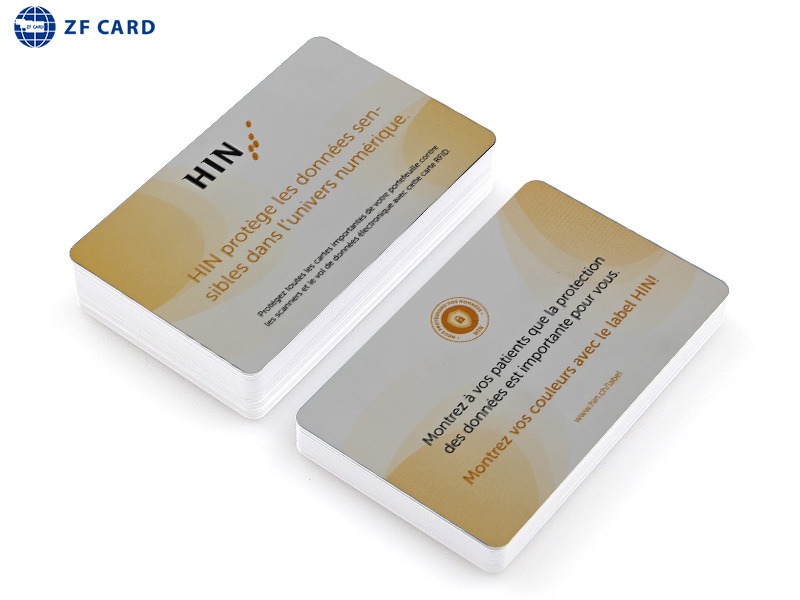
This flexible customization capability allows the campus ID card to be optimized for different campus environments.
Card Materials and Printing Options
In practical applications, campus ID cards can be made from various materials, such as PVC, PET, or composite materials, to meet long-term usage requirements.
Simultaneously, RFID chip cards support high-quality color printing and lamination processes, giving the cards a more professional visual appearance that aligns with the school's brand image.
Encoding and Data Personalization
In terms of data processing, RFID chip cards allow for chip writing and data encoding. Each campus ID card can be bound to a unique UID for accurate identification.
This personalized encoding method enables seamless integration of campus ID cards with backend systems, meeting the management needs of different schools.
Visual and Functional Customization
To meet diverse needs, campus ID cards can also be customized with various functions. For example, photos, barcodes, or QR codes can be added to enhance recognition capabilities.
Furthermore, RFID chip cards can be combined with magnetic stripes or contact chips to form multi-functional composite cards suitable for a wider range of applications.
Conclusion
With continuous technological advancements, the functional boundaries of campus ID cards are being infinitely expanded. From basic identification to complex campus ecosystem construction, integrated high-performance RFID chip smart cards have become the cornerstone of building "smart campuses."
As a leading global smart card manufacturer, ZFcard has over 20 years of industry experience. We focus on providing educational institutions with high-quality, customized campus ID card solutions. Our advanced production facilities ensure that every RFID chip card undergoes rigorous quality testing and can withstand years of high-frequency campus use.
FAQ
Q1:How does an RFID chip card improve campus security?
A:An RFID chip card enhances security by enabling encrypted data storage and controlled access permissions. When used in a campus id card, it allows institutions to monitor entry records, restrict access to specific areas, and reduce the risk of unauthorized duplication.
Q2:Can a campus id card support multiple applications at the same time?
A:Yes, a modern campus id card based on RFID chip card technology can integrate multiple functions, including access control, cashless payment, attendance management, and library services, all within a single card system.
Q3:What types of RFID chip cards are commonly used for campus id card systems?
A:Common types of RFID chip card used in campus id card systems include HF (13.56 MHz) chips such as MIFARE series, which are suitable for secure and short-range applications like access control and payments.