

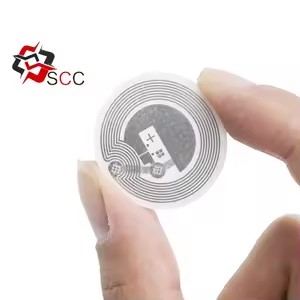
If you have ever used mobile payment, unlocked a hotel room with your smartphone, or tapped a product package to access digital information, you have already interacted with NFC technology. Behind these seamless interactions sits a surprisingly small but highly functional component known as the NFC tag.
For businesses building connected products, understanding what an NFC tag is means far more than simple technical knowledge. NFC chip selection, compatibility requirements, communication protocols, material durability, and manufacturing quality all influence product performance once systems move into real-world deployment.
Whether you are developing smart lock systems, sourcing custom NFC products, building IoT devices, or integrating contactless authentication into commercial systems, understanding how NFC tags work helps avoid expensive technical and procurement mistakes later. This guide explains what NFC tags are, how they work, where they are used, and what businesses should consider when selecting NFC solutions at scale.
What Is an NFC Tag and Why Is It Becoming So Common?
An NFC tag is a small wireless device that contains a microchip and antenna, allowing it to store information and communicate with nearby NFC-enabled devices using short-range radio frequency communication. NFC stands for Near Field Communication, a communication standard designed for secure short-distance wireless interaction, typically operating within a range of 4 centimeters.
Unlike traditional systems that require physical card insertion, barcode scanning, or manual input, NFC technology allows data exchange simply by placing two compatible devices close together. Most NFC tags are passive devices, meaning they do not contain batteries. Instead, they temporarily draw power from an external NFC reader or smartphone during communication. As contactless interaction becomes increasingly common across consumer and enterprise systems, NFC technology continues expanding into applications where speed, convenience, and secure authentication are essential.
Why Contactless Communication Is Replacing Traditional Systems
Unlike older identification systems that require physical contact—such as swiping cards, scanning barcodes, or manual verification—NFC eliminates these friction points. With a simple tap of a phone or card against a reader, the system instantly executes its programmed action. This seamless interaction reduces hardware wear and tear, elevates the user experience, and simplifies secure authentication workflows.
Industries That Depend on NFC Technology
The use of NFC technology has expanded far beyond mobile payment.
- Hotels increasingly deploy NFC mobile key systems that replace traditional room cards.
- Smart lock manufacturers integrate NFC authentication directly into residential and commercial access systems.
- Retail companies use NFC-enabled product packaging to improve customer engagement and product verification.
- Manufacturers embed NFC chips inside IoT products to simplify device pairing and product configuration.
Digital business cards and contactless membership systems have also become increasingly common across enterprise environments.
How Does an NFC Tag Work?
At its core, NFC communication relies on wireless energy transfer combined with short-range radio frequency communication.
Although the process happens in milliseconds, several technical steps occur during every interaction.
Step 1 — NFC Reader Generates Electromagnetic Field
An NFC-enabled device, such as a smartphone or dedicated reader, continuously generates a radio frequency field operating at 13.56 MHz.
Step 2 — NFC Tag Receives Wireless Energy
When an NFC tag enters this field, the tag's antenna captures electromagnetic energy.
Step 3 — NFC Chip Activates Without Battery
Because most NFC tags are passive devices, they rely entirely on energy from the nearby reader.
The chip temporarily powers on.
Step 4 — Stored Data Is Transmitted
After activation, the chip sends stored data back to the reader.
This data may include identification credentials, encrypted authentication information, URLs, product data, or access permissions.
Step 5 — Reader Processes Information
The NFC reader receives the transmitted data and interprets it according to the connected system.
Step 6 — System Performs Action
The system then performs the programmed action.
This may involve unlocking a smart lock, opening a webpage, verifying identity, or authorizing secure access.
What Components Are Inside an NFC Tag?
Although NFC tags appear simple on the outside, their internal structure involves carefully engineered electronic components.
- At the center sits the NFC microchip, responsible for storing information and controlling communication protocols.
- Connected to the chip is the embedded antenna coil, which receives electromagnetic energy from nearby NFC readers and transmits data signals back during communication.
- The chip itself contains memory sectors for storing programmable data.
- Each NFC chip also contains a UID (Unique Identifier) that allows systems to recognize individual tags during authentication.
- Protective material layers surround the internal electronics and shield components from environmental damage.
- Depending on application requirements, outer materials may include PVC, PET, paper labels, epoxy coating, or ABS plastic.
The physical design directly affects signal performance, durability, read consistency, and long-term reliability.
The Science Behind How NFC Technology Communicates Wirelessly
From a user perspective, NFC communication feels almost instantaneous. From an engineering perspective, several complex physical principles make this possible.
Electromagnetic Induction
The NFC reader generates an alternating magnetic field. When the NFC tag moves close enough, its magnetic field induces an electric current in the antenna coil. This process is known as electromagnetic induction.
Passive Power Transfer
Unlike Bluetooth devices or wireless sensors, standard NFC tags do not contain internal batteries. The reader itself temporarily supplies the power needed for communication. This allows NFC tags to function reliably for years without internal power degradation.
Energy Harvesting Process
The small electrical current induced inside the antenna powers the internal chip long enough to complete data transmission. This entire process happens within milliseconds.
Load Modulation
Once activated, the chip changes the electrical load placed on the antenna. These small signal variations are detected by the NFC reader and interpreted as data.
Communication Standards
Most NFC systems operate under international communication standards, including:
- ISO 14443
- ISO 18092
- NFC Forum protocol standards
In commercial-grade NFC deployments, communication reliability often depends on strict protocol compatibility. Most smartphone-compatible NFC products rely on NDEF (NFC Data Exchange Format) for structured data exchange, whereas industrial systems typically operate over ISO 14443 Type A or Type B protocols.
Even small compatibility differences between chips can create integration issues when products need to communicate consistently across Android devices, iOS devices, dedicated industrial readers, or smart lock systems.
NFC Technology Comparison: NFC vs RFID vs QR Code vs Bluetooth
Businesses evaluating contactless technologies often compare NFC with other communication systems.
Each serves different use cases.
|
Technology |
Range |
Typical Applications |
|
NFC |
Up to 4 cm |
Mobile payment, smart locks |
|
RFID |
Short to long range |
Inventory systems, access control |
|
QR Code |
Optical scanning |
Marketing campaigns |
|
Bluetooth |
Longer range |
Device pairing, wireless communication |
NFC and RFID
NFC is technically a subset of broader RFID technology, operating specifically at 13.56 MHz. RFID systems can support significantly longer communication distances depending on the frequency range.
NFC and QR Codes
QR codes require visible scanning with a camera. NFC allows direct communication through simple physical proximity.
NFC and Bluetooth
Bluetooth requires device pairing and active power management. NFC communication begins instantly with close-range interaction.
Businesses evaluating contactless technologies can compare a broader range of RFID and NFC products through ZF CARD’s RFID product collection.
Different Types of NFC Tags Explained
Not all NFC tags support the same technical capabilities.
Different chip types are designed for different commercial applications.
- Type 1 NFC Tags offer lower memory capacity and support simple data storage.
- Type 2 NFC Tags are commonly used for consumer applications such as marketing campaigns and digital business cards.
- Type 3 NFC Tags offer greater memory capacity and are often used in specialized industrial systems.
- Type 4 NFC Tags offer stronger security features and support advanced encryption, making them suitable for enterprise-level authentication systems.
- Another important distinction involves read-only and rewritable NFC tags.
- Read-only tags cannot be modified after programming.
- Rewritable tags allow data updates multiple times throughout product life cycles.
Where Are NFC Tags Used in Commercial Applications?
NFC technology supports far more than consumer mobile payment systems.
- In the hospitality industry, NFC mobile key systems allow hotel guests to unlock rooms using smartphones instead of physical hotel key cards.
- Smart lock manufacturers increasingly integrate NFC authentication directly into residential and commercial security products.
- Luxury brands embed NFC chips inside product packaging to create anti-counterfeit verification systems.
- Retail companies use NFC-enabled packaging to connect physical products with digital marketing experiences.
- IoT manufacturers embed NFC chips inside connected devices to simplify setup, authentication, and wireless pairing.
- Many businesses now use NFC-based digital business cards instead of printed contact cards.
- Automotive manufacturers have also begun adopting NFC technology for secure vehicle access systems.
How to Choose the Right NFC Tag for Your Business
For many businesses, selecting an NFC tag is less about understanding NFC technology itself and more about ensuring compatibility with the final product or connected system.
|
Business Application |
Recommended NFC Chip |
Product Format |
|
Hotel Mobile Key System |
NTAG213 / NTAG215 |
NFC Hotel Card |
|
Smart Lock Systems |
Secure Type 4 Chip |
Access Control Card |
|
Product Authentication |
NTAG216 |
NFC Product Label |
|
Retail Smart Packaging |
NTAG213 |
NFC Sticker |
|
Digital Business Card |
NTAG215 |
PVC NFC Card |
|
Industrial Equipment Tracking |
Secure Durable Chip |
ABS NFC Tag |
What to Consider When Choosing an NFC Tag Manufacturer
Choosing an NFC supplier involves far more than comparing prices.
- Production capability directly affects long-term product reliability.
- Manufacturing capacity becomes critical when projects require consistent performance across tens of thousands of units.
- Chip sourcing stability has also become increasingly important as semiconductor supply chain disruptions continue affecting lead times globally.
- OEM customization capability determines whether suppliers can support custom printing, UID programming, memory encoding, chip personalization, and proprietary product specifications.
- International buyers should carefully review supplier testing procedures.
- Reliable manufacturers typically perform compatibility testing across multiple devices before shipment.
- Certification standards, quality control systems, and export experience also provide strong indicators of manufacturing discipline.
- MOQ flexibility and lead-time reliability should always be evaluated before making bulk purchasing decisions.
Businesses sourcing custom NFC products should prioritize engineering capability and production consistency rather than focusing only on price.
Companies evaluating custom manufacturing solutions can review ZF CARD's broader smart card production capabilities directly.
Understanding NFC Technology Helps Businesses Build Better Connected Products
While NFC communication may appear simple to the end user, successful large-scale commercial deployment ultimately hinges on manufacturing quality and strategic supplier selection. Product performance is dictated by complex engineering factors—such as chip compatibility, antenna design, material durability, and manufacturing precision; therefore, for IoT developers, smart lock manufacturers, and enterprise procurement teams, partnering with an expert supplier proficient in chip encoding, frequency testing, and OEM customization is essential to mitigate deployment risks and ensure long-term system reliability and product consistency.
Frequently Asked Questions
1. What is an NFC tag used for?
NFC tags are commonly used for mobile payment systems, hotel key cards, smart lock authentication, product verification, access control systems, and IoT device pairing.
2. How do NFC tags work without batteries?
Most NFC tags are passive devices that receive temporary power from nearby NFC readers through electromagnetic induction.
3. Can NFC tags be rewritten multiple times?
Rewritable NFC tags allow stored data to be updated repeatedly, while read-only tags cannot be modified after programming.
4. How do businesses choose the right NFC chip for a product?
Businesses should evaluate memory capacity, smartphone compatibility, encryption requirements, read/write functionality, and long-term durability before selecting NFC chips.
5. Are NFC tags secure enough for access control systems?
Secure NFC chips supporting encryption and authentication protocols are widely used in commercial access control and smart lock systems.
6. What should buyers check before ordering custom NFC tags from suppliers?
Buyers should verify chip sourcing stability, encoding capability, production consistency, testing procedures, MOQ flexibility, material durability, and supplier export experience before placing bulk orders.