


As contactless technology continues to replace traditional magnetic stripe and barcode systems, RFID cards are increasingly used in security systems, payment solutions, identity management, inventory tracking, and smart automation.
This guide explains everything you need to know about RFID cards, including how RFID technology works, the different RFID card types available, where RFID cards are used, how secure they are, and how businesses choose the right RFID card solution for their applications.
What Is an RFID Card?
An RFID card is a type of contactless smart card that uses radio frequency identification technology to transmit data wirelessly between the card and a compatible RFID reader. Unlike traditional cards that require physical contact, RFID cards communicate through radio waves. Inside each card is a small embedded microchip connected to an antenna. When the card moves within the electromagnetic field generated by an RFID reader, the chip activates and transmits its stored information to the system.
In simple terms, an RFID card allows digital information to be stored and transmitted without direct physical contact. This technology is widely used because it enables fast identification, automated authentication, and seamless user interaction. Businesses often use RFID cards for employee access control, membership management, hotel room access, transportation ticketing, and cashless payment systems. At its core, RFID technology is designed to make identification faster, safer, and more efficient.
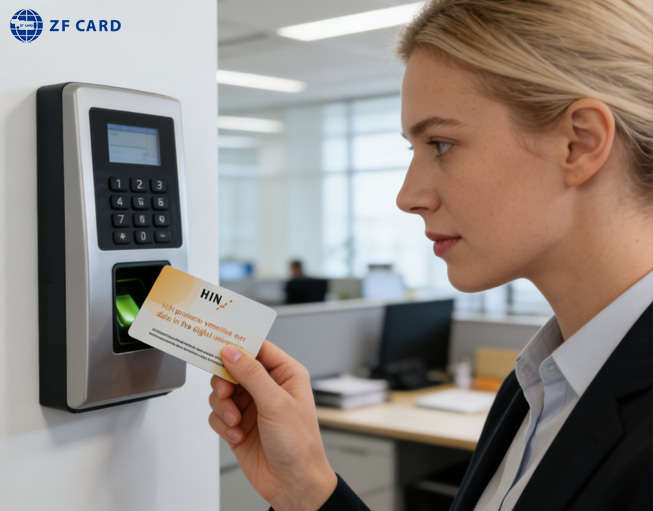
How Does an RFID Card Work?
The working principle of RFID cards is surprisingly straightforward, even though the technology itself involves radio communication and embedded microelectronics.
The process begins when an RFID reader emits electromagnetic radio waves through its antenna. These radio waves create an invisible communication field around the device. Once the RFID card enters this field, the antenna embedded inside the card detects the signal. In most RFID systems, especially passive RFID cards, the card itself does not contain a battery. Instead, it draws energy directly from the reader’s electromagnetic field. This temporary power activates the RFID chip inside the card.
Once activated, the chip sends stored information back to the RFID reader. This information could be a card ID number, encrypted security credentials, user authorization data, or other programmed information. The reader then sends the information it receives to the connected software system. If the credentials match the system requirements, the requested action happens automatically, such as unlocking a door, registering attendance, processing a payment, or verifying identity.
This entire process happens almost instantly, usually within a fraction of a second, which is one of the main reasons RFID technology has become so popular.
What Components Are Inside an RFID Card?
Although RFID cards look similar to ordinary plastic cards, their internal structure includes several specialized components that work together.
At the center of the card is the RFID microchip, which stores digital information and handles communication protocols. Attached to the chip is a thin antenna made from copper, aluminum, or conductive ink that receives and transmits radio signals. These components are embedded in the physical card body, which is commonly made of PVC, PET, ABS, or environmentally friendly composite materials, depending on the manufacturing requirements.
The card may also include printed surfaces for branding, barcodes, QR codes, serial numbers, or custom security printing.
Manufacturers such as ZF Card Factory often provide fully customized RFID card production services, including chip encoding, customized printing, and material selection tailored to specific business needs.
Different RFID Card Types Explained
Not all RFID cards operate in the same way. RFID technology can be classified based on power source and communication frequency.
Passive RFID cards
Passive RFID cards do not contain an internal battery and rely entirely on energy transmitted from the RFID reader. Because of their simple structure and lower manufacturing cost, passive RFID cards are widely used in office access cards, hotel key cards, campus ID systems, and employee badges.
Active RFID cards
Unlike passive cards, active RFID cards contain an internal battery that powers the chip independently. This allows the card to communicate over longer distances and store more complex data. Active RFID technology is more commonly used in industrial asset tracking, vehicle management systems, and logistics monitoring.
There are also semi-passive RFID cards, which combine elements of both systems. These cards use internal battery power but only activate transmission when triggered by a reader.
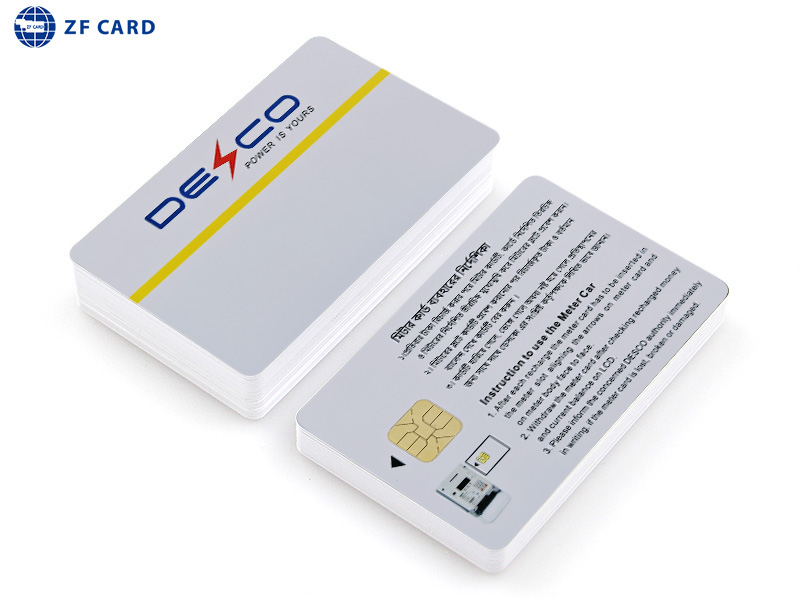
RFID Card vs NFC Card: What Is the Difference?
Many people use RFID and NFC interchangeably, but they are not exactly the same technology.
NFC, which stands for Near Field Communication, is actually a subset of RFID technology. Both technologies use radio waves for wireless communication, but NFC operates exclusively at 13.56 MHz and supports two-way communication. This means NFC-enabled devices such as smartphones can both read and exchange data.
Traditional RFID systems often focus only on one-way identification and can operate across multiple frequency ranges. A simple way to understand the relationship is this: Every NFC card uses RFID technology, but not every RFID card supports NFC.
Where Are RFID Cards Used?
RFID cards have become essential across a wide range of industries because they simplify identification and automate system interaction.
- In corporate offices, RFID access cards allow employees to enter buildings without physical keys while giving administrators complete control over access permissions.
- Hotels rely heavily on RFID key cards because they allow front desk staff to issue temporary room access instantly while improving overall security management.
- Public transportation systems use RFID cards to speed up passenger entry and reduce transaction friction. Subway cards, bus cards, and prepaid transportation systems are among the most familiar examples.
- Retail businesses and membership organizations use RFID cards for customer loyalty programs, identification systems, and automated check-in processes.
- Educational institutions issue RFID student ID cards for attendance management, library access, meal payment systems, and campus security.
- Warehouses and industrial facilities increasingly combine RFID technology with automation systems to improve asset visibility and supply chain efficiency.
As businesses move toward digital transformation, RFID technology continues to expand into more operational environments.
How Businesses Choose the Right RFID Card
Choosing the right RFID card depends on far more than simply selecting a chip.
Businesses first need to understand the required reading distance.
A short-range office access system requires a completely different solution from a warehouse tracking system that covers several meters.
Security requirements are equally important.
A gym membership card may only need basic identification functions, while enterprise access systems usually require encrypted authentication.
Compatibility is another important factor.
The RFID chip must match the communication protocol used by the existing reader infrastructure.
Card material also matters, depending on the usage environment.
Standard PVC cards work well for daily identification, while industrial applications sometimes require more durable ABS or PET materials.
Custom printing options often play a role as well, particularly for businesses that need branded membership cards, employee ID cards, hotel key cards, or event access cards.
Manufacturers like ZF Card Factory provide customized RFID and NFC card production for companies that require specialized chip configurations, printing solutions, and enterprise-level card manufacturing.
Frequently Asked Questions About RFID Cards
1. How far can RFID cards be read?
The reading distance depends on the card frequency and chip type. Standard access cards typically work within a few centimeters, while UHF RFID systems can communicate over several meters.
2. Can RFID cards be cloned?
Yes, some low-security RFID cards can be copied if they lack encryption. Secure RFID cards using advanced authentication protocols are far more resistant to cloning.
3. Do RFID cards need batteries?
Most RFID cards are passive, meaning they do not contain batteries. They receive power temporarily from the RFID reader during communication.
4. What is the difference between RFID and NFC?
NFC is a subset of RFID technology that supports short-range two-way communication, commonly used with smartphones and contactless payment systems.
5. Can smartphones read RFID cards?
Most smartphones can only read NFC-compatible RFID cards operating at 13.56 MHz.
6. How long do RFID cards last?
High-quality RFID cards often remain functional for five to ten years, depending on usage conditions and environmental exposure.
Conclusion
Although RFID cards look simple on the surface, the technology inside combines wireless communication, embedded microchips, secure authentication, and automation systems that improve efficiency across countless industries. Whether a company is building an office access system, launching a smart membership program, developing hotel key card solutions, or implementing supply chain automation, understanding how RFID cards work is the first step toward choosing the right technology. As demand for smart card solutions continues growing, manufacturers such as ZF Card Factory help businesses build customized RFID and NFC card solutions designed for specific commercial and technical applications.