


In modern hotel operations, management efficiency and security standards directly shape guest experience, operational costs, and brand reputation. As hotel properties continue to expand in scale and services become increasingly diversified, traditional manual management methods are no longer sufficient to support efficient, secure, and controllable operations. Against this backdrop, the hotel key card has evolved from a simple door-opening tool into a critical interface connecting hotel management systems, security infrastructure, and guest experience.
This article systematically explores the role of hotel key card systems in hotel operations, covering their working principles, technological evolution, impact on operational efficiency, security value, and the importance of customized design. It aims to help hotel managers and procurement decision-makers gain a comprehensive understanding of the significance of key cards for hotels in modern hospitality management.
How Does the Hotel Key Card Works
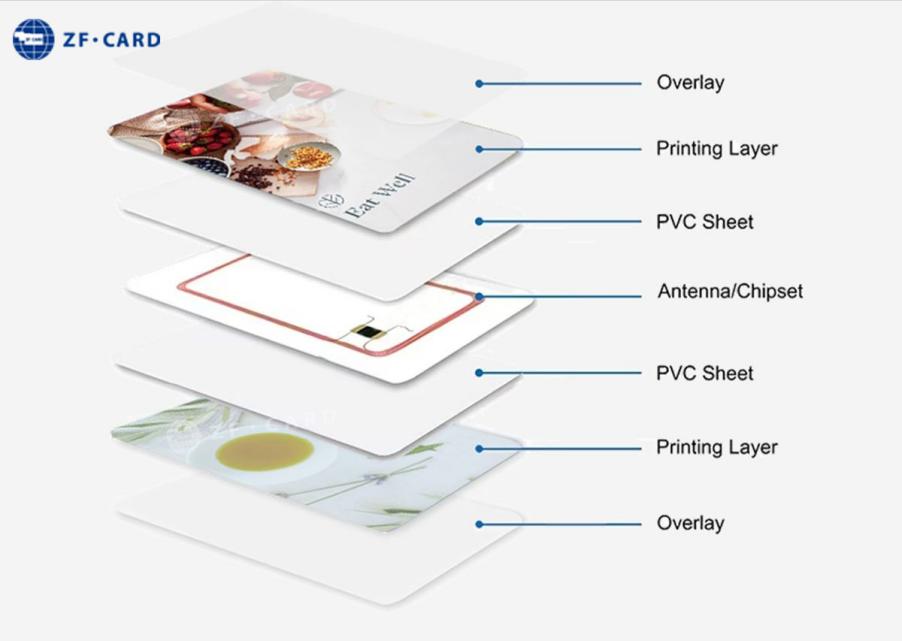
The efficient operation of a modern hotel key card relies on a precisely engineered layered structure combined with non-contact RFID technology. Through multi-layer lamination, the card not only protects the delicate internal chip but also ensures durability and visual appeal.
A high-quality RFID key card typically consists of multiple layers, each serving a critical function:
• Overlay: The outermost layer protects against scratches, water exposure, and UV fading, directly determining the lifespan of the hotel room key card under frequent use.
• Printing Layer: Offset printing technology is used to accurately reproduce complex hotel visual identity (VI) systems on the card surface.
• PVC/PET/ABS Sheet: Premium key cards for hotels utilize high-quality PVC or ABS materials to ensure flexibility and resistance to bending or breakage.
• Antenna/Chipset: This layer integrates a microchip (such as TK4100 or T5577) with an embedded antenna that runs around the card body.
When a guest places the hotel room key card near the reader, the electromagnetic field generated by the lock activates the antenna, powering the chip and enabling secure data transmission. This non-contact read method significantly reduces mechanical wear and enhances system stability. For cards operating at a 125 kHz frequency, response time is nearly instantaneous, delivering a smooth and seamless door-opening experience.
The Evolution of Hotel Key Cards
The evolution of hotel key cards reflects the hospitality industry’s continuous pursuit of higher operational efficiency, stronger security, and better guest experience. From mechanical keys to magnetic stripe cards and today’s intelligent hotel key card systems, each technological advancement has pushed key cards for hotels from basic access tools toward intelligent management carriers.
1. Traditional Mechanical Keys: Low Efficiency and High Risk
In the early stages of hotel development, mechanical keys were widely used. While sufficient for small properties with low occupancy rates, their limitations became apparent as hotels expanded.
Mechanical keys are easily lost or duplicated. Once misplaced, replacing the entire lock set is often necessary, leading to high maintenance costs and operational disruptions.
2. Magnetic Stripe Cards: The Beginning of Digital Hotel Key Cards
With the advancement of electronic technology, magnetic stripe cards were introduced as early hotel room key card solutions. This marked the first step toward card-based and digital access control, partially improving management efficiency.
However, the shortcomings of magnetic stripe cards became increasingly evident over time:
• Vulnerability: Magnetic stripes are easily demagnetized by phones, laptops, or magnetic clasps, resulting in frequent access failures and guest complaints.
• Low Security: Magnetic stripes store static, unencrypted data, making them easy to clone using simple card readers.
• Mechanical Wear: Insert-style locks require physical contact, and long-term friction leads to reader damage and high maintenance costs.
3. RFID Technology: A Turning Point for Smart Hotel Key Cards
To address these issues, RFID key cards emerged as a contactless solution based on radio-frequency identification technology, fundamentally transforming hotel access systems.
• Smarter Chips: RFID cards equipped with TK4100, T5577, or customized chips support stronger processing capabilities and dynamic encryption.
• Improved Durability: With no physical contact required, the internal chip of a hotel room key card is sealed within multiple PVC layers, remaining unaffected by external magnetic fields.
• Expanded Management Capabilities: RFID solutions provided by professional hotel key card suppliers allow multiple permissions—such as elevator access, parking, and dining—to be integrated into a single card.
How Hotel Key Cards Improve Daily Management Efficiency
In modern hospitality operations, the hotel key card has become a core driver of labor efficiency and cost reduction. Through deep integration with Property Management Systems (PMS), key cards for hotels transform complex manual workflows into streamlined digital processes, delivering significant advantages in front desk efficiency, access control, and energy management.
1. Faster Front Desk Operations
Traditional key management requires manual registration and retrieval. With modern hotel room key card systems, front desk staff simply encode the card at the issuing terminal, automatically writing booking data such as room number, stay duration, and access privileges.
• Rapid Check-in: Card issuance can be completed in under three seconds, significantly reducing queues during peak hours.
• Seamless Check-out: Cards expire automatically at checkout, eliminating concerns over unreturned keys and enabling fast departures.
2. Granular Multi-Level Access Control
Managing personnel access is a major operational challenge. RFID key cards support role-based access control (RBAC):
• Layered Staff Authorization: Housekeeping staff can be issued floor-restricted cards valid only during working hours, while maintenance staff receive temporary cards linked to service tickets.
• Manager Master Cards: In emergencies, managers can activate high-level hotel key card permissions to resolve issues quickly, reducing communication delays.
3. Building an Integrated “One-Card” Ecosystem
High-quality custom hotel key cards extend beyond room access to serve as comprehensive guest credentials:
• Public Area Access: Integration with elevator systems, gyms, pools, and executive lounges ensures controlled access.
• Cashless Consumption: In full-service hotels, the hotel room key card can function as a payment credential for restaurants or spas, with transactions automatically synchronized to the billing system.
4. Data-Driven Operational Optimization
Every interaction with key cards for hotels generates valuable data.
• Housekeeping Tracking: Entry records help management evaluate cleaning duration and staff efficiency, enabling optimized scheduling.
• Resource Allocation: Analyzing access frequency in public areas allows hotels to adjust facility hours and staffing more scientifically.
5. Seamless Loss Management and Reissuance
Lost cards are no longer operational crises. When a guest misplaces a hotel room key card, the front desk issues a replacement while the system automatically invalidates the old card. When the new card is first sensed at the door, the door lock will automatically recognize it and block the instructions of the old card. This efficient reissue mechanism eliminates the need for manual lock replacement, greatly protecting the hotel's asset security and management continuity.

key cards for hotels
Enhancing Hotel Security with Smart Key Card Systems
Security is the foundation of hotel operations. Through multi-layer authentication, immutable audit trails, and physical access controls, RFID key cards create a comprehensive security framework for both guests and management.
1. Chip-Level Encryption and Anti-Cloning Protection
Unlike magnetic stripe cards, premium RFID key cards (such as T5577 or TK4100) use dynamic key authentication.
• Encrypted Data: Card data is protected by 128-bit or higher encryption algorithms, rendering it unreadable without authorized keys.
• Anti-Tamper Mechanisms: Professional key cards for hotels can lock or disable themselves after repeated unauthorized access attempts.
2. Comprehensive Access Logging
One of the most powerful security features of hotel room key card systems is detailed access logging. Smart locks record entry time, duration, and user identity. In case of disputes or incidents, management can quickly reconstruct access histories, significantly reducing theft risks.
3. Time and Zone-Based Access Restrictions
Key cards for hotels enable precise access control:
• Automatic Expiry: Each hotel room key card is valid only within its assigned timeframe, preventing overstays.
• Zone Control: Access can be restricted to authorized floors or areas, protecting private and staff-only spaces.
The Value of Custom Hotel Key Card Design
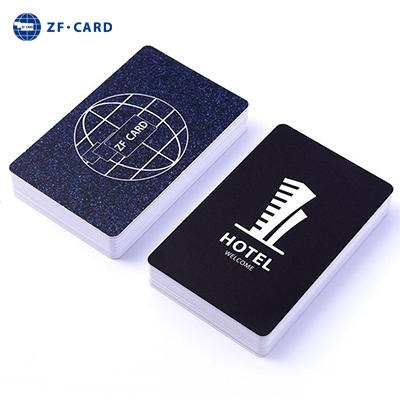
Hotel key card design is a brand’s mobile “business card.” Through custom hotel key cards, hotels can transform a simple tool into a powerful marketing asset, enhancing brand awareness and improving guest satisfaction.
• Brand Visual Extension: Customized hotel key card designs perfectly showcase a hotel's logo, standard colors, and unique visual style. Whether matte, glossy, or frosted, different surface finishes convey different brand positioning.
• Interactive Marketing Medium: By printing QR codes on custom hotel key cards, hotels can guide guests to official restaurant reservation pages, spa appointment centers, or social media accounts. This combination of physical cards and digital marketing boasts extremely high conversion rates.
• Prestige from Special Craftsmanship: Utilizing crafts such as laser code, UV ink, or embossing, key cards can achieve an artistic feel. For example, using gold foil stamping on executive or VIP cards instantly elevates the hotel’s prestige.
Choosing the Right Hotel Key Card Supplier
Selecting an excellent hotel key card supplier is crucial for ensuring the long-term stable operation of your system. Buyers should focus on evaluating the supplier’s technical compatibility, manufacturing processes, and customization capabilities.
• Chip Compatibility: Ensure the supplier can support chips with multiple protocols (such as TK4100, T5577, etc.) and is compatible with mainstream door lock systems.
• Manufacturing Process Diversity: An excellent hotel key card supplier should possess capabilities ranging from offset printing to various special crafts (laser, UV, serial number).
• Materials and Environmental Certification: Check if the materials are high-quality virgin PVC/PET/ABS. Inferior recycled materials not only affect the appearance of the hotel key card design but may also cause the card to crack or demagnetize during use.
• Customization Support: Confirm supplier support for logo customization, graphic customization, and special sizing requirements. ZFCard offers comprehensive graphic customization services, ensuring every custom hotel key card is uniquely yours.
Conclusion
Hotel key cards are the cornerstone of modern intelligent hotel management. From the underlying RFID key card technology to the brand communication conveyed through hotel key card design, every aspect profoundly impacts a hotel's operational efficiency and asset security.
As a leading hotel key card supplier, ZFCard is committed to providing hotels worldwide with the highest quality key card solutions. With over 20 years of experience in smart card manufacturing, we offer a full range of services, from chip customization to special surface treatments. Whether you’re seeking more secure hotel room key cards or looking to enhance brand value through custom hotel key cards, ZFCard provides highly competitive products and expert advice to help your hotel gain a competitive edge in digital transformation.
FAQ
Q1: Which surface finish is better, matte or glossy?
A1: Matte finishes are more resistant to fingerprints and scratches, offering a premium tactile feel, while glossy finishes deliver more vibrant colors. The choice depends on brand positioning.
Q2: What elements can be customized on a hotel key card?
A2: Chips, colors, dimensions, printing content, surface finishes, and logos can all be customized to meet different hotel requirements.
Q3: How long do RFID hotel key cards typically last?
A3: Compared to magnetic stripe cards, RFID key cards offer a much longer lifespan and can be reused for years under normal conditions.
Q4: What is the main efficiency advantage of RFID cards over magnetic stripe cards?
A4: Non-contact operation and higher data stability reduce read failures and card damage, minimizing front desk intervention and improving overall management efficiency.