

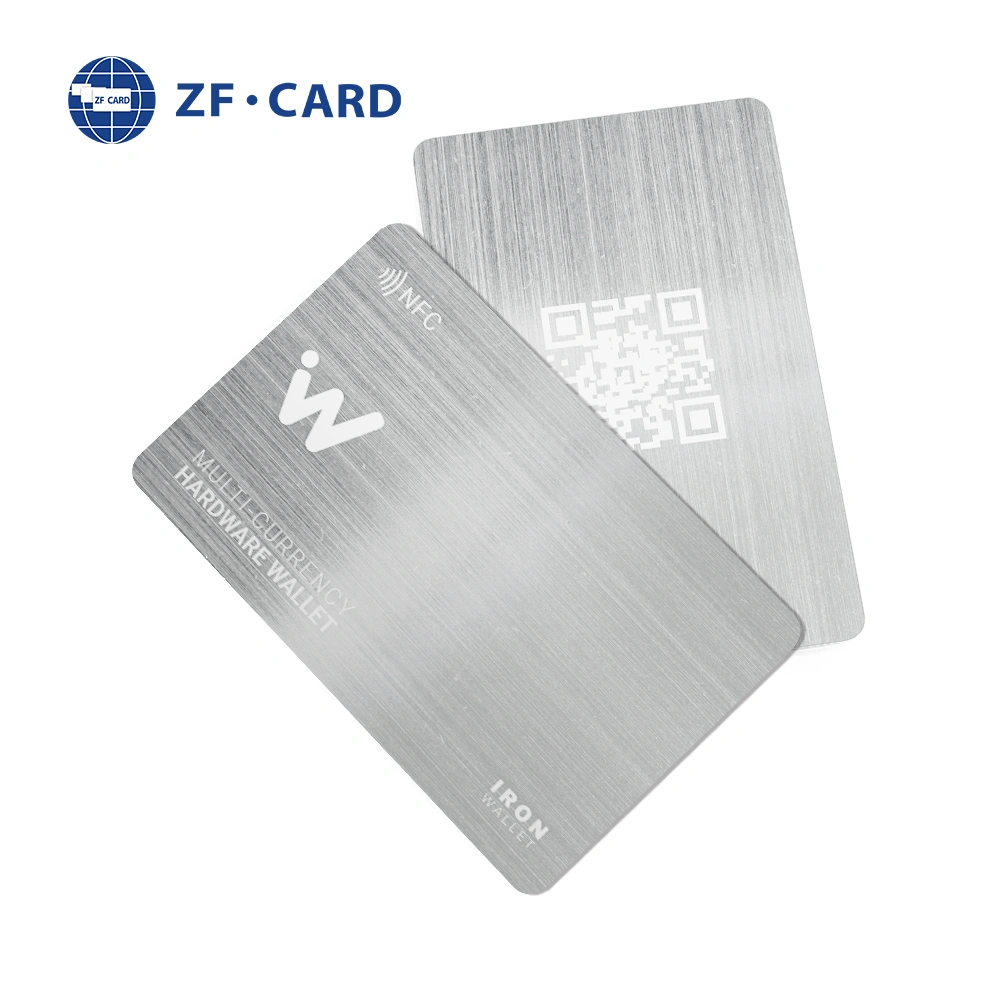
A MIFARE card is a contactless smart card that contains a MIFARE integrated circuit, antenna and card body. It is widely used for hotel room access, employee identification, campus cards, transport tickets and membership systems.
However, “MIFARE card” does not describe only one chip. MIFARE is a product family. Different models have different memory capacities, security features, data structures and compatibility requirements. This is why two cards can look identical, operate at the same frequency and still fail to work with the same door lock.
What Is a MIFARE Card?
MIFARE cards normally communicate with a reader through contactless radio technology. Many common MIFARE products operate at 13.56 MHz and use the ISO/IEC 14443 Type A interface.
A typical card includes:
- A contactless IC chip
- A copper or aluminum antenna
- A PVC, PET or paper card body
- Printed artwork, logo or variable data
The card does not usually require a battery. The reader creates an electromagnetic field that powers the chip during communication. Under suitable conditions, many MIFARE products can be read from a distance of up to approximately 100 mm, although the actual reading distance depends on the antenna, reader, card position and surrounding materials.
The most important point is that the chip inside the card determines how the card works. The card material and printing affect durability and appearance, but they do not determine whether it will open a hotel door.
MIFARE Chip Types Compared
MIFARE Classic Card
MIFARE Classic is one of the most widely used MIFARE families for traditional access-control and identification applications. Common versions include 1K and 4K memory capacities.
A MIFARE Classic card may be suitable for an existing hotel key card system, office access system or membership program. However, the correct memory size, sector structure, keys and encoding method must match the installed system.
MIFARE Classic remains practical for many legacy applications, but it should not automatically be selected for a new high-security project.
MIFARE Plus Card
MIFARE Plus is designed to help upgrade systems based on MIFARE Classic. It can support a Classic-compatible mode while also providing a path toward stronger AES-based security.
This makes MIFARE Plus useful when a project needs improved security but cannot replace all existing readers and locks at once. Compatibility still depends on how the system is configured, so the card should be tested before a large order.
MIFARE DESFire Card
MIFARE DESFire is designed for more advanced applications that require stronger security, flexible data structures and multiple applications on one card.
For example, a single card may support room access, elevator access and staff-area permissions. DESFire EV3 is available in 2 KB, 4 KB and 8 KB versions and supports advanced cryptographic functions, including AES.
A MIFARE DESFire card is not automatically a replacement for a MIFARE Classic card. The lock system must support the correct DESFire version, application structure and encryption keys.
MIFARE Ultralight
MIFARE Ultralight cards have limited memory and are commonly used for tickets, short-term credentials and high-volume applications.
They may be suitable for temporary access or event management, but they should not be assumed to work with hotel door locks simply because they operate at 13.56 MHz.
MIFARE Card Comparison
| Chip family | Typical memory | Main advantage | Common applications | Hotel lock consideration |
|---|---|---|---|---|
| MIFARE Classic | 1 KB or 4 KB | Widely used legacy platform | Access, membership, hotel systems | Confirm memory and encoding structure |
| MIFARE Plus | Varies by model | Security upgrade path | Access-control migration | Confirm compatibility mode |
| MIFARE DESFire | 2 KB, 4 KB or 8 KB for common EV3 versions | Strong security and multi-application support | Hotels, campuses, enterprise access | Confirm EV version and application keys |
| MIFARE Ultralight | Limited memory | Low cost and simple data storage | Tickets and temporary credentials | Not automatically compatible |
What Frequency Does a MIFARE Card Use?
Most commonly used MIFARE cards operate at 13.56 MHz, which is part of the high-frequency RFID range.
This is different from:
- 125 kHz low-frequency proximity cards
- 860–960 MHz UHF RFID tags
- Magnetic-stripe cards
- Bluetooth or mobile credentials
Frequency is an important starting point, but it is not a complete compatibility test. A MIFARE Classic card and a MIFARE DESFire card may both operate at 13.56 MHz, yet use different memory structures, authentication methods and encoding procedures.
Therefore, a purchase specification should include the chip family, exact version, memory, protocol, encoding method and reader or encoder model.
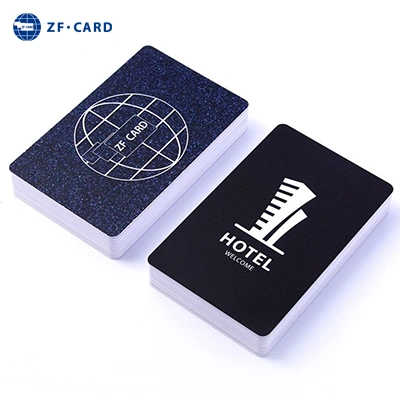
Will a MIFARE Card Work with a Hotel Lock?
Sometimes—but not every MIFARE card works with every hotel lock.
Hotel key card compatibility depends on the complete access-control system, including:
- The lock brand, model and generation
- The reader technology
- The card chip and memory structure
- The encoder and hotel management software
- The encryption keys or application configuration
Before ordering, follow this process.
Step 1: Identify the Existing Lock
Check the brand and model printed on the lock, installation documents, software interface or previous purchase records. If the card is inserted or swiped through a slot, the system may use magnetic stripe technology. If the card is tapped against the lock, it is likely contactless RFID.
Step 2: Check the Existing Card
Look for information such as 13.56 MHz, MIFARE, 1K, 4K, DESFire or other technical markings. If the card has no visible information, provide a physical sample to a qualified supplier for testing.
Step 3: Confirm the Encoder
A card may be readable by the lock but still fail during encoding. Confirm the card encoder model, software version and required card format before selecting a replacement.
Step 4: Test a Sample
Always test a sample card with the actual hotel lock and encoder. A successful test should include card encoding, room-door access, elevator or public-area access and card cancellation or expiration.
Step 5: Approve the Bulk Specification
Once the sample works, document the exact chip, memory, card thickness, antenna design, printing requirements and encoding process. This specification should be used for future reorders.
Common MIFARE Card Selection Mistakes
The most common mistakes are:
- Ordering a card based only on the phrase “13.56 MHz”
- Assuming all MIFARE cards are interchangeable
- Choosing a card based only on the lock brand
- Replacing Classic with DESFire without checking the system
- Skipping sample testing before a bulk order
- Confusing NFC phone reading with hotel lock compatibility
- Ignoring the encoder, software or encryption requirements
The safest rule is simple: match the card to the installed system, not the other way around.
Practical Applications of MIFARE Cards
The most common applications include:
- Hotel room access: Room door locks, public areas and elevator permissions.
- Access control: Offices, campuses and employee entry systems.
- Membership and ticketing: Member identification, transport tickets and event access.
How to Specify MIFARE Hotel Key Cards
A clear purchasing specification should include:
MIFARE Classic 1K or MIFARE DESFire EV3, 13.56 MHz, ISO/IEC 14443 Type A, CR80 size, required memory, encoding method, encoder model and compatibility test required.
Hotels and system integrators should also confirm card thickness, surface finish, antenna performance, printing durability and expected annual quantity.
ZFCARD provides OEM and ODM smart card manufacturing, free design and sample support for hotel key cards and RFID projects. To reduce compatibility risks, send the lock model, existing card sample, encoder information and required quantity before requesting a bulk quotation.
RFID cards and contactless IC cards can be customized for different project requirements.
Frequently Asked Questions
Are all MIFARE cards 13.56 MHz?
Most common MIFARE cards use 13.56 MHz, but the exact chip and protocol still need to be confirmed.
Can any MIFARE card open a hotel door?
No. The chip, memory structure, encoding method, encryption and lock system must be compatible.
Is MIFARE Classic the same as MIFARE DESFire?
No. They are different MIFARE families with different data structures and security capabilities.
Is frequency enough to select a hotel key card?
No. Frequency is only the first check. The lock model, encoder, chip type and card configuration are equally important.
Should I test hotel key cards before bulk ordering?
Yes. Testing samples with the actual lock and encoder is the most reliable way to prevent incompatibility and costly reorders.
Hotel smart lock solutions and contact ZFCARD for compatibility support and bulk project inquiries.