


Under the circumstances where the membership economy continues to deepen and the offline and digital experiences are constantly integrating, VIP cards have gradually evolved from simple identity recognition tools into an important carrier for brands to connect with customers, enhance loyalty and improve operational efficiency.
For a long time, magnetic stripe cards have been widely used in various membership systems due to their low cost and simple production. However, as issues such as security risks, service life and data carrying capacity have become increasingly prominent, traditional magnetic stripe cards have been unable to meet the high security, high efficiency and personalized requirements of membership management in 2026. Against this backdrop, non-contact VIP Cards are rapidly replacing magnetic stripe cards and becoming the mainstream choice for the new generation of membership systems.
The Limitations of Magnetic Stripe Cards
Magnetic stripe cards have shown limitations in modern high-frequency commercial scenarios, primarily due to physical wear and tear and extremely low security. While their initial cost was low, long-term maintenance costs and potential security risks render them unsuitable for membership systems in 2026.
Firstly, from a security perspective, the relatively simple data structure of magnetic stripe cards makes them extremely easy to copy or tamper with. When VIP cards are used for high-value purchases, stored value, points accumulation, or identity verification, copying or fraudulent use will directly lead to economic losses and brand risks.
Secondly, magnetic stripe cards are highly dependent on the physical environment. In daily use, the magnetic stripe is easily demagnetized or damaged by friction, magnetic fields, and dirt. This means businesses need to frequently replace cards, increasing operating costs and impacting the member experience. This deficiency is particularly pronounced for high-end club VIP cards or long-term gym membership cards.
Furthermore, magnetic stripe cards have inherent limitations in terms of functional expansion. They are almost impossible to integrate with multiple applications and systems and struggle to meet the demands of modern membership systems for real-time data processing and system integration. In 2026, a year that emphasizes digital operations and refined management, magnetic stripe cards have gradually become a "weak link" restricting the upgrading of the membership system.
The Advantages of Non-Contact VIP Cards
The move toward non-contact VIP cards represents a leap from mechanical interaction to electromagnetic intelligence. By utilizing Radio Frequency Identification (RFID) technology, these cards communicate with readers without any physical touch, solving the durability and security issues of the previous generation.
How it Works
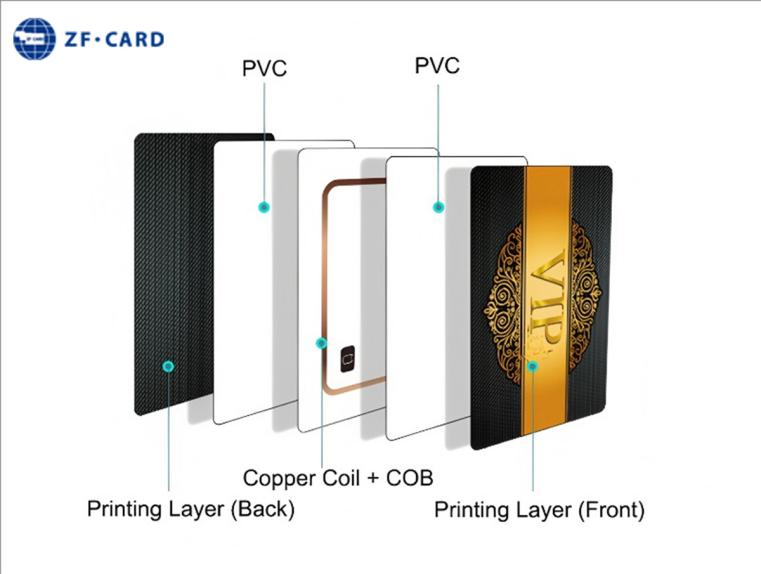
Most non-contact VIP cards utilized for loyalty and access control operate on the 125KHZ frequency. Inside the card, a small silicon chip is connected to a copper antenna. When the VIP card enters the electromagnetic field generated by the reader, the antenna picks up the signal, powering the chip via induction. This allows the chip to transmit its unique identification code to the system instantly. This process happens in milliseconds and requires no physical contact, hence the name.
Unparalleled Durability and Speed
Because there is no “swiping” involved, a non-contact VIP card can last for years without any degradation in performance. For a smart card manufacturer, this means producing a product that maintains its integrity even in harsh environments. The lack of friction means the surface of the custom VIP cards remains pristine, preserving the brand’s visual identity. Additionally, the speed of “Tap and Go” transactions significantly improves the flow of people. Whether it is a busy gym membership card check-in desk or an exclusive entrance requiring a club VIP card, the bottleneck of failed swipes is eliminated, directly enhancing the customer's first impression of the service.
Enhanced Data Security and Capacity
Unlike magnetic stripes, the chips inside contactless VIP cards can support various levels of encryption. Even at the 125kHz level, the unique UID of each chip makes it much harder to clone compared to a standard magnetic stripe. For more advanced custom membership cards, the internal memory allows for multiple application sectors, meaning a single card can act as a room key, a payment tool, and a loyalty tracker simultaneously. As a leading smart card manufacturer, we ensure that these chips are integrated seamlessly into the PVC or PET body to protect the hardware from environmental damage.
Different Application Scenarios of VIP Card
As membership management evolves from “identity verification” to “data-driven and experience management,” the application scenarios for VIP cards are becoming increasingly segmented and deeply integrated into the operational systems of various industries.
1. Club & Private Membership
High-end clubs and private clubs typically have high requirements for service privacy, thus demanding higher standards for the security and stability of VIP cards.
Contactless VIP cards can be deeply integrated with access control systems and dedicated area permission control systems, enabling automatic identification and access management for different membership levels. For example, regular members, premium members, and VIP members can enter different areas using custom VIP cards with different permission configurations, avoiding the efficiency and privacy issues associated with manual verification.
Furthermore, through customized design and high-quality printing processes, club VIP cards can become part of the brand image, strengthening members' sense of identity and belonging.
2. Gym & Fitness
In the fitness and sports industry, gym membership cards are often used in high-frequency environments, requiring extremely high durability and readability stability. Traditional magnetic stripe cards are prone to failure in such scenarios due to sweat, friction, or bending, severely impacting the member experience.
With non-contact VIP cards, members can easily verify their identity by simply touching or bringing their hands close to the card reader, significantly improving access efficiency. More importantly, the VIP card can be integrated with turnstiles, lockers, and class check-in systems, achieving “one card, multiple uses.”
For chain fitness brands, uniformly designed custom membership cards enhance brand consistency and support cross-store identification and data synchronization, enabling better member data analysis and operational decision-making.
3. Retail & Loyalty Programs
In retail and chain brands, VIP cards are a crucial touchpoint connecting brands and consumers. Unlike traditional membership cards used only for discounts, modern custom VIP cards emphasize data collection and user behavior analysis.
Through non-contact VIP cards, members can be quickly identified during purchases, points accumulation, and redemption, reducing queuing time and improving the overall shopping experience. Simultaneously, the backend system can record purchase frequency, preferences, and store distribution, providing data support for targeted marketing.
4. Hospitality & Premium Services
In the hospitality, resort, and premium services industry, VIP cards typically serve multiple functions, including identity verification, access control, and service integration. Compared to magnetic stripe cards, non-contact VIP cards offer advantages in terms of check-in experience and security.
For example, high-end hotels can provide customized VIP cards for VIP clients, enabling access to exclusive channels, VIP lounges, or gyms. This contactless experience not only improves efficiency but also enhances the technological sophistication and professionalism of premium services.

custom VIP card for various applications
Why Custom VIP Cards are Becoming Standard in 2026
In 2026, the “one-size-fits-all” approach to card manufacturing is dead. Personalization and brand differentiation are the primary drivers for businesses when they order custom VIP cards. Customization goes far beyond just printing a logo; it involves the integration of specific hardware and aesthetic crafts that align with the brand’s digital identity.
The demand for custom membership cards is fueled by the need for brand recognition. In a crowded market, a standard white card is easily forgotten. However, a VIP card featuring high-quality offset printing, UV spot ink, and a unique serial number creates a tangible connection between the brand and the consumer. Sophisticated crafts such as laser-engraved codes and thermal printing for individual member names allow each VIP card to feel unique.
Moreover, the technical specifications of custom VIP cards are now being tailored to specific software environments. A professional smart card manufacturer can provide chips like the T5577, which allows for ID duplication or customized data encoding, providing the flexibility needed by system integrators and smart lock providers. The ability to choose between PVC, PET, or even eco-friendly ABS materials allows brands to align their physical non-contact VIP cards with their corporate social responsibility goals.
Tips of Transition from magnetic stripe cards to Non-Contact VIP Cards
Upgrading from traditional magnetic stripe cards to non-contact VIP cards is not a simple card replacement; it's a comprehensive upgrade involving technology selection, system adaptation, user experience, and supply chain collaboration.
1. Define Business Scenarios and Usage Frequency
Enterprises first need to assess the usage frequency, reading distance, and security requirements of VIP cards based on actual application scenarios. Different scenarios have different technical requirements for non-contact VIP cards. For example, frequently used gym membership cards prioritize reading stability and durability, while high-end club VIP cards emphasize access control and data security.
In most membership recognition scenarios, the 125kHz frequency remains a widely adopted solution due to its stability and maturity. Combined with chips such as the TK4100 and T5577, enterprises can achieve a smooth transition from magnetic stripe cards to contactless VIP cards while keeping costs under control.
2. Optimize Card Structure and Materials
Compared to magnetic stripe cards, non-contact VIP cards have a significant advantage in durability, but this depends on the appropriate selection of card structure and materials. Businesses should select appropriate materials, such as PVC, PET, or ABS, based on the usage environment to ensure stable performance of VIP cards over long-term use.
For high-frequency use or complex environments, such as gyms or chain stores, structurally stable materials with strong bending resistance will significantly reduce wear and tear, lowering subsequent maintenance and card replacement costs.
3. Partner with Experienced Smart Card Manufacturers
Choosing a reliable smart card manufacturer is a key factor for success during the transformation process. Professional manufacturers not only provide consistent quality non-contact VIP cards but also offer practical advice on chip selection, process matching, and bulk delivery.
For custom VIP card projects requiring long-term operation, partnering with manufacturers possessing customization capabilities and quality control systems helps businesses maintain high flexibility and consistency when expanding their membership programs in the future.

Conclusion
Non-contact VIP Cards are gradually replacing traditional magnetic stripe cards due to their security and durability, and are becoming the mainstream choice for the membership system in 2026. For enterprises that aspire to enhance their brand image and strengthen member loyalty, upgrading VIP card technology is no longer an option but a strategic necessity.
As a professional smart card manufacturer, ZFCard is dedicated to providing high-quality custom VIP cards and one-stop customization solutions to global customers. From chip selection to printing processes, from functional design to batch delivery, ZFCard always uses reliable quality and flexible customization capabilities to help you build a more competitive membership system.
FAQ
Q1: Are non-contact VIP Cards more costly than magnetic stripe cards?
A1: The initial cost of a single card may be slightly higher, but due to its longer lifespan and lower maintenance costs, the overall ownership cost is usually more advantageous.
Q2: What customization options can custom VIP cards offer?
A2: They can support custom logos, colors, graphics, chip types, printing processes, and surface effects, meeting the needs of different brands.
Q3: Which materials are suitable for gym membership cards?
A3: PVC or ABS materials are usually recommended, as they balance durability and cost control.
Q4: Does a club VIP card require an encrypted chip?
A4: For high-end or high-value membership systems, an encrypted chip can significantly enhance security. It is recommended to prioritize this option.
Q5: How can one choose a reliable smart card manufacturer?
A5: Key factors to consider include manufacturing experience, customization capabilities, quality control systems, and project support capabilities to ensure long-term cooperation stability.