

An RFID badge should do more than unlock a door. When connected to the right reader, controller, and attendance platform, one card can identify an employee, authorize access to specific areas, and create a time-stamped attendance record.
That is why RFID access control cards are widely used in offices, factories, warehouses, campuses, hotels, and multi-site businesses. However, the card itself is only one part of the solution. Reliable access and attendance management depends on card compatibility, system configuration, data accuracy, and proper employee lifecycle management.
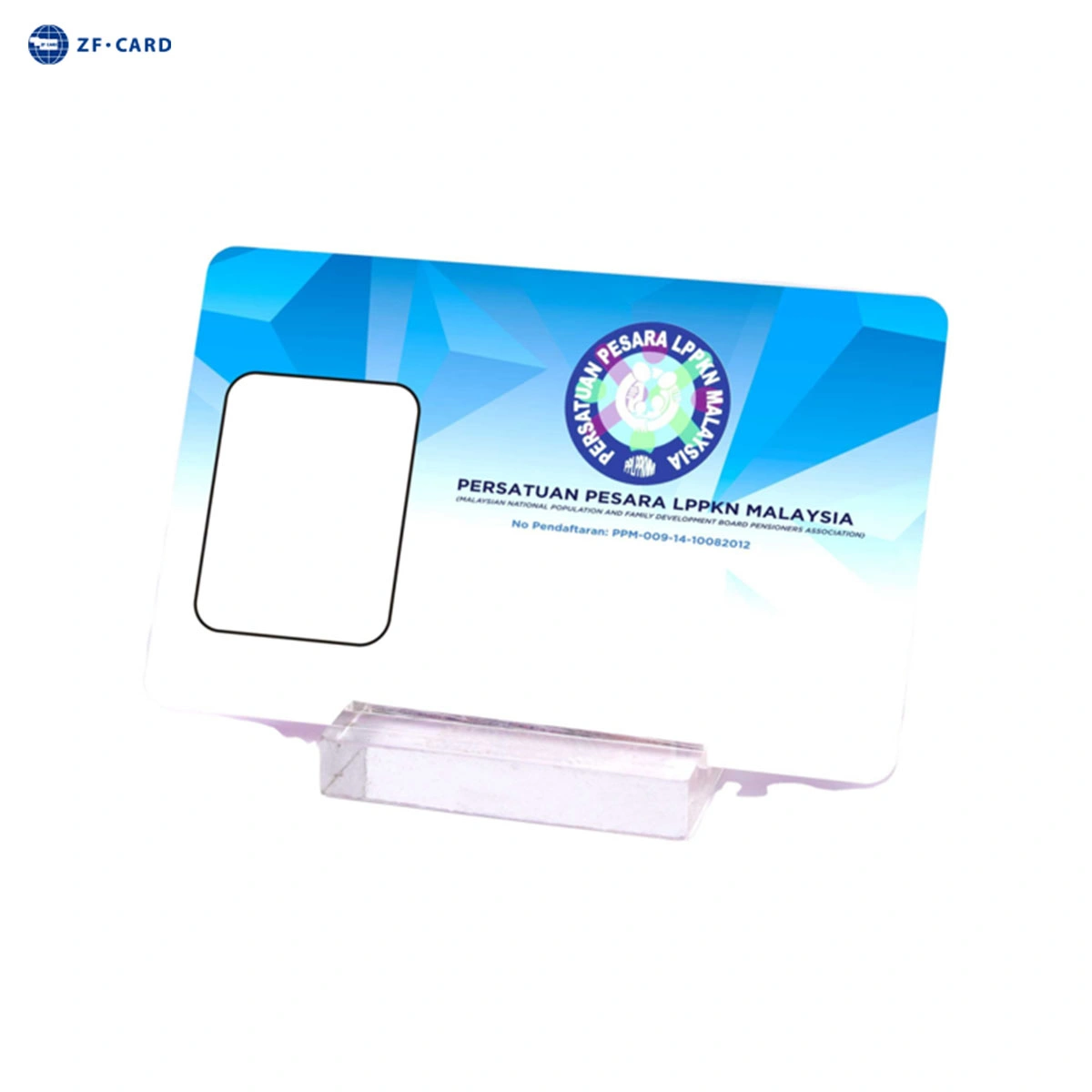
RFID employee card for access control and attendance
How RFID Cards Support Access Control and Attendance
The basic workflow is simple:
- An employee presents an RFID card to a reader.
- The reader captures the card’s unique ID.
- The access control system checks the employee’s permissions.
- The door opens or access is denied.
- The software records the employee, time, location, and event type.
Technical guidance from the National Institute of Standards and Technology describes a similar structure: the reader sends card information to a controller, the controller makes the access decision, and the central system manages permissions and audit records.
This means an RFID card does not normally store a complete attendance report. It provides the employee credential, while the software records and processes the event.
For U.S. employers covered by the Fair Labor Standards Act, the Department of Labor states that records should include hours worked each day and each workweek. Payroll records generally need to be retained for at least three years. Local requirements may differ, but the principle is useful everywhere: attendance data should be accurate, traceable, and easy to review.
Why Businesses Use RFID Employee Access Cards
An employee access card system can connect physical security with daily workforce management.
Controlled Access by Person and Area
Administrators can assign access rights according to employee role, department, location, and schedule. For example, production staff may enter manufacturing areas, while contractors may only access designated service zones.
Permissions can also be changed when an employee transfers departments, loses a card, or leaves the company. Deactivating a credential is faster and safer than collecting and manually tracking physical keys.
Faster and More Consistent Attendance Records
Employees can clock in and out using the same credential used for building access. This reduces manual sign-in work and creates a consistent record of arrival, departure, shift changes, and attendance exceptions.
A proximity card attendance system is especially useful for factories and warehouses where employees work in shifts or enter through controlled gates.
Better Auditability
Access logs can help answer practical questions:
- Who entered a restricted area?
- When did an employee arrive?
- Was a card used after an employee’s termination?
- Which attendance records require correction?
- Did a visitor or contractor access an employee-only zone?
The value comes from the complete system, not from the card alone.
Which RFID Card Type Is Right for Your Workforce?
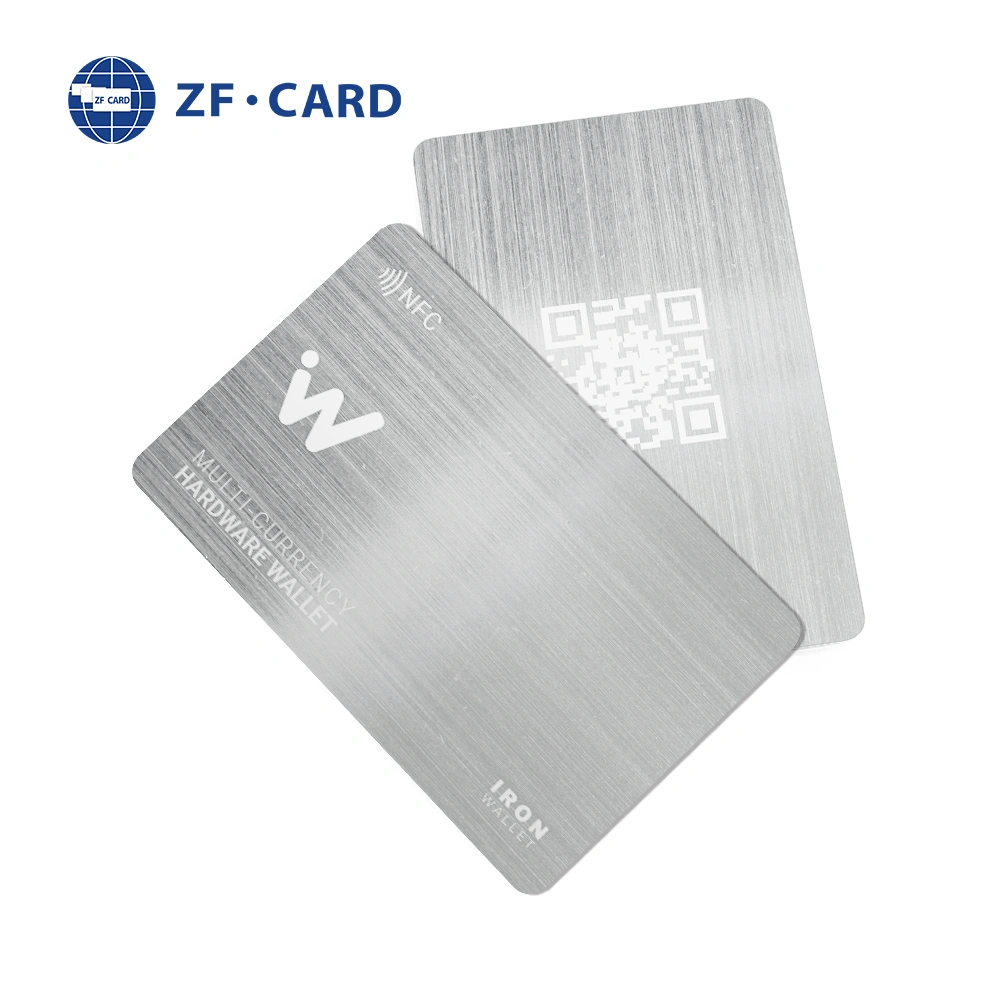
13.56 MHz contactless IC card for employee access control and attendance
| Card type | Suitable applications | Main advantage | Important consideration |
|---|---|---|---|
| 125 kHz LF proximity card | Basic office, factory, residential, and legacy systems | Cost-effective and widely used | Confirm the reader format and security level |
| 13.56 MHz HF/NFC card | Modern offices, campuses, enterprise systems, and high-security areas | Supports smart-card functions and stronger security options | Confirm chip, protocol, and reader compatibility |
| Dual-frequency card | Sites using both legacy and modern readers | Supports gradual system migration | Requires careful encoding and testing |
| UHF RFID card | Vehicle gates, parking, and long-range identification | Supports hands-free reading at greater distances | Not always suitable for intentional employee tap-in attendance |
The frequency alone does not determine security. Chip architecture, encryption, reader configuration, controller security, and credential-management policies all matter.
For higher-security applications, organizations may consider encrypted HF smart cards. MIFARE DESFire EV3, for example, supports ISO/IEC 14443 interfaces and AES-based cryptographic options. The correct choice should always be based on the actual access-control platform rather than a frequency label alone.
Practical Applications
Offices
Employees use one card for lobby access, elevators, meeting rooms, and attendance terminals. Permissions can follow working hours and department responsibilities.
Factories and Warehouses
RFID cards can separate access to production lines, warehouses, laboratories, and administrative areas. The same card can support shift attendance while providing a record of entry into controlled zones.
Multi-Site Companies
A standardized employee credential can simplify access management across several offices or facilities. System integrators can also use a common card design while configuring different permissions at each location.
Hotels and Service Facilities
Hotels can issue staff cards for back-of-house corridors, storage rooms, maintenance areas, and management offices. Access can be limited according to job role and working schedule.
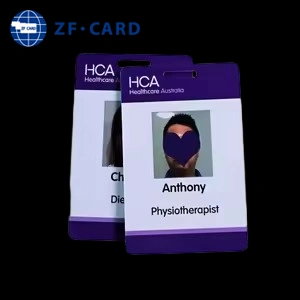
Employee ID card for workplace security and access control
How to Choose RFID Access Control Cards
Before placing a bulk order, confirm the following information:
- Reader frequency: Is the system using 125 kHz, 13.56 MHz, UHF, or another technology?
- Card format: Does the reader require a specific chip, facility code, UID, Wiegand format, or data structure?
- Security level: Is a basic read-only ID sufficient, or is encrypted authentication required?
- Personalization: Do you need employee photos, logos, serial numbers, QR codes, or barcodes?
- Encoding: Will the cards be encoded before shipment?
- Durability: Will the cards be used outdoors, in factories, near moisture, or with lanyards?
- Testing: Has a production sample been tested with the actual reader and software?
- Supply requirements: What are the required quantity, MOQ, replacement policy, and delivery schedule?
ZFCARD provides factory-direct OEM and ODM support, including card design, sampling, printing, encoding assistance, and after-sales guidance. The company’s project information lists 18 years of ODM/OEM experience, a minimum order quantity of 500 cards, and a typical 3–5-day delivery cycle for suitable projects. Exact lead time should be confirmed after the chip, material, encoding, artwork, and order quantity are defined.
Common Mistakes to Avoid
- Assuming every RFID card works with every reader.
- Choosing a frequency without checking the chip and protocol.
- Treating an RFID card as a complete attendance system.
- Publishing “100% secure” or “impossible to copy” claims.
- Failing to deactivate lost or terminated employee cards.
- Buying in bulk before completing reader compatibility tests.
- Ignoring privacy, access-log retention, and attendance correction procedures.
Final Recommendation
The best RFID access control cards are not simply the cheapest cards or the cards with the longest reading distance. They are the cards that match the reader, support the required security level, integrate with the attendance platform, and remain reliable throughout the employee lifecycle.
Before ordering, send the card reader model, frequency, chip requirement, artwork, quantity, and intended application to the manufacturer. A sample test and a clear specification review can prevent compatibility problems and help create a more reliable employee access card system.