

Wooden RFID cards combine a natural wood body or veneer with an embedded RFID chip, antenna, adhesive layer, and protective finish. The wood creates the visual identity and tactile experience; the chip and antenna determine how the card works with a hotel lock, access reader, smartphone, or other RFID system.
They are not simply plastic cards with a wood-effect print. Before ordering, buyers should confirm the material structure, chip type, antenna design, finish, encoding method, and target reader.
What Are Wooden RFID Cards?
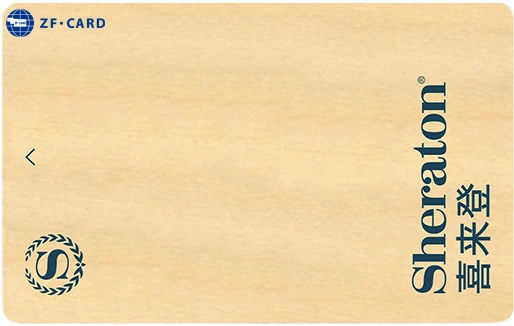
A wooden RFID card is a contactless card made with wood as the visible body or surface layer. Depending on the design, it may use bamboo, birch, maple, beech, cherry, walnut, sapele, or another qualified wood material.
The wood itself does not decide whether a card is compatible. Compatibility depends on the complete construction, including:
- RFID frequency and chip model
- Antenna size and position
- Card thickness and adhesive layers
- Reader, door lock, phone, or access-control system
- Encoding and data format
- Surface coating and final production quality
This is why a working sample is more useful than a product image or digital design proof.
Which Materials Are Used in Wooden RFID Cards?
Different woods create different branding and production results.
| Material | Typical advantage | What buyers should confirm |
|---|---|---|
| Bamboo | Light appearance and clean engraving | Edge strength, coating, and moisture resistance |
| Birch or maple | Pale surface and strong print contrast | Color consistency between batches |
| Beech or cherry | Warm appearance for hotels and memberships | Surface finish and natural tone variation |
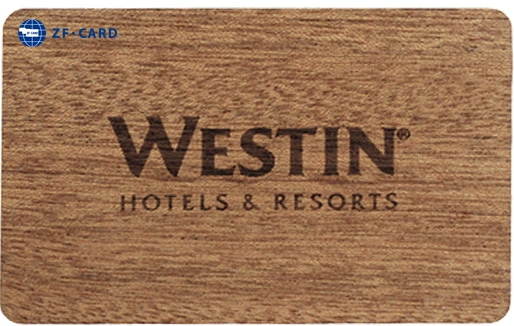
| Walnut or sapele | Dark, premium grain | White ink, laser contrast, and artwork visibility |
Natural wood has grain and color variation. No two cards will look perfectly identical, so the acceptable range should be agreed during sample approval.
The finish is equally important. Laser engraving creates a permanent natural mark, while UV printing supports colorful logos, images, QR codes, and variable data. White ink can improve contrast on darker wood. A sealed or coated surface can help protect the card from moisture, skin oils, scratches, and daily handling.
For sustainability projects, ask whether the wood is FSC-certified and what the certification covers. FSC certification relates to responsible forest-based material and supply-chain tracking. It does not automatically mean that the chip, coating, adhesive, or complete finished card is biodegradable.
How Do Wooden RFID Cards Work?
The correct technology should be selected from the target system, not from the card’s appearance.
NFC wooden cards commonly use the 13.56 MHz contactless route and can be designed for smartphone interactions such as URLs, vCards, digital profiles, loyalty links, or campaign pages. However, not every RFID card can be read by a phone. Low-frequency or specialized RFID systems generally require their own reader.
For hotel, office, campus, or access-control projects, the supplier should confirm the exact chip family, reader model, encoding method, and security requirement. Two cards can use the same general frequency but still use different memory structures, protocols, or data formats.
The standard ID-1 card footprint is approximately 85.60 × 53.98 mm. The commonly referenced standard thickness is 0.76 mm, but a wooden RFID card may require a different thickness because of the wood body, inlay, protective coating, and antenna structure.
Before mass production, test the final sample for:
- Read and write performance
- Reading distance and orientation
- Compatibility with the actual reader or lock
- Phone behavior for NFC applications
- Encoding accuracy and data consistency
- Moisture, abrasion, bending, and surface-finish performance
Do not publish one universal reading-distance figure. The result depends on the chip, antenna, reader power, card thickness, and test environment.
Where Are Wooden RFID Cards Used?
Wooden Hotel Key Cards
Wooden hotel key cards are suitable for boutique hotels, resorts, villas, and hospitality brands that want the room key to reinforce the guest experience. They can support room access, elevators, lounges, spas, or other controlled areas when the chip and encoding are matched to the lock system.
For pool, spa, or outdoor use, specify the required moisture-resistance level instead of assuming that every wooden card is waterproof.
Wood Business Cards and NFC Marketing
Wood business cards can combine a premium physical design with an NFC link to a website, digital profile, contact information, or product page. A QR code can be added as a practical backup for phones that do not support the required NFC function.
Membership, Event, Campus, and Workplace Cards
Custom wooden cards may also be used for clubs, gyms, events, visitor programs, campus identification, employee access, loyalty programs, and brand activations. Security-sensitive projects should be reviewed by the system integrator before selecting a chip.
Wooden RFID Cards vs. PVC RFID Cards
| Factor | Wooden RFID Cards | PVC RFID Cards |
|---|---|---|
| Appearance | Natural grain and premium feel | Consistent color and surface |
| Batch consistency | Natural variation is expected | Easier to standardize |
| Printing | Strong for engraving and selected UV effects | Mature full-color printing |
| Moisture protection | Depends on coating and construction | Generally easier to maintain |
| Compatibility | Requires final system testing | More established supply chain |
| Best fit | Premium hotels, memberships, brands, and events | High-volume standardized programs |
Wood is not automatically the better material. It is usually the better choice when appearance, sustainability positioning, and tactile experience are important. PVC may be more practical when the project requires maximum consistency, frequent replacement, or very large-scale distribution.
Wooden RFID Card Project Requirements Checklist
A clear project brief should include:
- Use case: hotel access, NFC networking, membership, event entry, ID, or loyalty.
- System information: reader, lock, encoder, phone, software, or integrator details.
- Chip and data: chip model, frequency, UID, NDEF, access data, QR code, serial number, or member ID.
- Physical requirements: wood type, card size, thickness, corners, holes, slots, weight, and packaging.
- Branding: artwork, engraving, UV printing, white ink, foil, QR code, and color expectations.
- Environment: humidity, water exposure, temperature, abrasion, bending, and expected service life.
- Production plan: quantity, MOQ, sample quantity, encoding file, delivery deadline, and inspection criteria.
For ZFCARD projects, buyers can request factory-direct OEM/ODM support, free design, and proofing. The project information lists an MOQ of 500 cards and a stated 5–7-day delivery window, but final terms should be confirmed after the wood, chip, finish, encoding, and sample requirements are approved.
Common Mistakes to Avoid
- Do not choose a chip only because its frequency appears suitable.
- Do not treat “FSC-certified” as proof that the entire card contains no plastic.
- Do not approve a screen image without checking a physical sample.
- Most importantly, do not accept “100% compatible” without testing the finished card on the actual reader or lock.
Expert tip: Select the reader and data requirement first, then choose the wood, thickness, finish, and artwork around the system.
FAQs About Wooden RFID Cards
Can wooden RFID cards work with hotel locks?
Yes, when the chip, antenna, card thickness, encoding, and lock system are correctly matched and tested together.
Are wooden RFID cards waterproof?
They can be sealed for improved moisture resistance, but waterproof performance depends on the coating, construction, and test conditions.
Can an NFC wooden card be read by a smartphone?
Yes, if it uses a suitable NFC chip and has been encoded for phone interaction. Other RFID frequencies may require a dedicated reader.
What should I send when requesting a quotation?
Send the use case, reader or lock model, chip requirement, quantity, wood type, finish, artwork, data format, packaging, and delivery deadline.
For a wooden RFID card project, send your system information and design requirements to ZFCARD before production. The team can help review the material, chip, artwork, sample, and manufacturing plan.