

Ordering custom RFID cards is not simply a matter of printing a logo on plastic. The card must work with your reader, use the correct chip, support the required data, meet your branding standards, and arrive on schedule.
This guide explains the key requirements for custom RFID cards, including MOQ, samples, encoding, quality control, certifications, warranty, and bulk delivery.
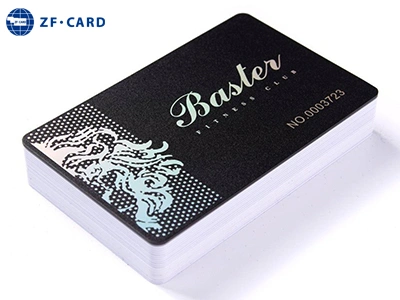
Custom RFID Cards for Bulk Orders
Custom RFID Cards at a Glance
| Requirement | What buyers should confirm |
|---|---|
| MOQ | The current project brief lists 500 cards as the working MOQ |
| Sample | Confirm whether the sample is stock, printed, encoded, or fully customized |
| Chip | Match the frequency and chip model to your existing reader |
| Encoding | Define the data format, numbering rules, security keys, and testing method |
| Delivery | ZFCARD states a 5–7-day delivery time after requirements are confirmed |
| Warranty | Confirm coverage, exclusions, replacement terms, and freight responsibility |
1. Choose the Chip Before Finalizing the Design
The correct RFID chip depends on your application, reader, read distance, memory, and security requirements.
For hotel key cards, access cards, membership cards, and many NFC applications, 13.56 MHz HF technology is widely used. For item identification and longer-distance reading, UHF RFID systems generally operate in the 860–960 MHz range under the EPC Gen2 specification.
The frequency must match the reader. A card that works with one access-control system may not work with another system using a different frequency or communication protocol.
Chip memory and security also matter. For example, the official MIFARE DESFire EV3 specification supports 13.56 MHz operation, 2 KB, 4 KB, or 8 KB memory options, and advanced security features for multi-application systems. Buyers should confirm the exact chip model instead of ordering only a general “RFID card.”
The standard ID-1 card format is approximately 85.60 × 53.98 × 0.76 mm according to ISO/IEC 7810. If the card must fit an existing printer, wallet, dispenser, or door-lock system, confirm the size and thickness tolerance before production.
2. Understanding MOQ for RFID Cards in Bulk
The current ZFCARD project brief lists 500 pieces as the working MOQ for standard custom RFID card projects.
However, the actual MOQ may change according to:
- Card material and thickness
- Chip model and availability
- Printing method and surface finish
- Number of designs
- Encoding and personalization requirements
- Packaging and labeling
- Special shapes or custom tooling
For example, 500 cards with one design are easier to schedule than 500 cards divided into ten designs with different data files and separate packaging.
When requesting an RFID card wholesale quotation, ask the supplier to state:
- MOQ per design and chip type
- Setup or tooling charges
- Price for blank, printed, and encoded cards
- Whether mixed designs can be combined
- Packaging quantity per box and carton
- Reorder MOQ for the same design
A lower MOQ is useful for market testing, but a higher quantity may provide better unit pricing and more efficient production.
3. Approve an RFID Card Sample Before Bulk Production
A sample should confirm more than appearance. It should represent the final card structure, chip, printing method, surface finish, and encoding process.
The ZFCARD Blank Card product page states that samples are produced for confirmation before production. For custom printed RFID cards, buyers should check:
- Card dimensions, thickness, color, and surface finish
- Logo position, print sharpness, and color consistency
- Chip response with the actual reader or printer
- Read range and orientation in the real application
- Successful writing and reading of the required data
- Lamination quality, edges, bending resistance, and packaging
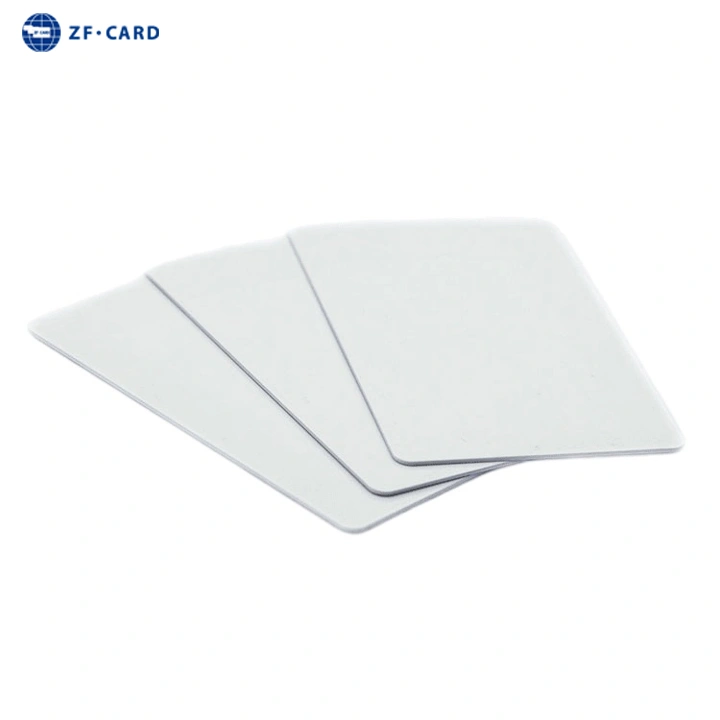
RFID Card Samples Before Bulk Production
A sample tested only with a mobile phone may not represent performance in a hotel lock, access-control system, or industrial reader. Test the sample with the same hardware and software used at the final installation site.
Do not approve a sample based only on a digital rendering. A rendering cannot confirm chip placement, RF performance, or encoding accuracy.
4. Encoding RFID Cards: Confirm the Data in Writing
Printing and encoding are separate production requirements. A card can look perfect and still fail if the wrong information is written to the chip.
Before encoding RFID cards, provide a written specification covering:
- Chip model and memory structure
- UID, serial number, URL, text, EPC, or access-control data
- Numbering sequence and duplicate prevention
- Data file format, such as CSV or Excel
- Memory block, sector, or application requirements
- Encryption keys and access permissions
- Whether the card should be locked after writing
- Required encoding report or test log
For security-related projects, do not send live credentials during the first sample stage. Use test data to verify the process, then provide the final encrypted file after the sample is approved.
The quotation should also clarify who is responsible for incorrect buyer-supplied data, failed encoding caused by production, and re-encoding after shipment.
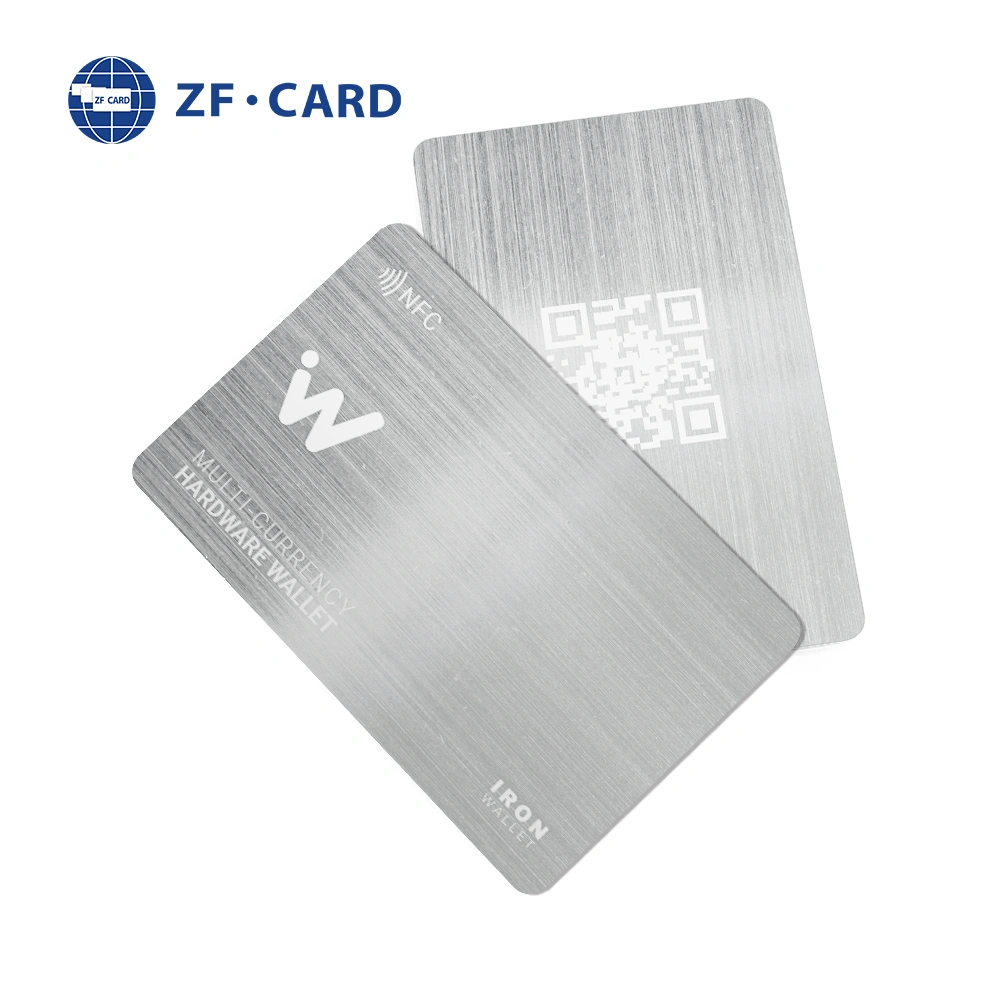
Contactless RFID Cards for Custom Encoding
5. What Does 5–7 Days Mean?
ZFCARD’s official FAQ page and its Blank Card product page state a 5–7-day delivery time for customized products with confirmed requirements.
Before placing an RFID cards bulk order, confirm what starts the 5–7-day period. It may begin after:
- Artwork approval
- Sample approval
- Deposit payment
- Chip and inlay confirmation
- Final encoding data submission
- Packaging confirmation
The quotation should also distinguish production time from international shipping and customs clearance. For urgent orders, ask whether the 5–7 days refers to working days, production days, or total delivery time.
A clear order confirmation should include the production start date, expected completion date, shipping method, destination, and responsibility for delays caused by missing information or late approval.
6. Certifications, Quality Control, and Warranty
ZFCARD publishes an ISO 9001:2015 certificate valid from June 23, 2025 to June 22, 2028. The stated scope covers the manufacture of smart IC cards and smart labels. Its ISO 45001:2018 certificate is listed as valid until November 10, 2027. These details are available on the ZFCARD downloads page.
The same page displays an FCC test report for an RFID CARD sample, report number KEYS241128011001FC-02, and a RoHS test report for an RFID CARD sample. Buyers should request the latest copies and confirm that the product scope matches the card model being ordered.
A management-system certificate is not the same as a product approval. The card material, chip, frequency, and test sample must match the actual project.
The ZFCARD Blank Card page lists a 25-step inspection process, including inlay function testing, working-frequency testing, 100% function testing, appearance inspection, thickness measurement, bending testing, packaging inspection, and final outgoing quality control.
The page also states a five-year warranty for Blank Cards, including replacement support for quality issues caused by the manufacturer. For custom RFID cards, the quotation should confirm whether the same warranty applies and define exclusions related to misuse, reader compatibility, encoding data, unauthorized modification, and shipping damage.
Common Ordering Mistakes
- Choosing a chip without checking the reader
- Approving a printed sample without testing RFID performance
- Treating UID reading as complete encoding
- Sending final data before the card structure is approved
- Assuming 5–7 days includes international shipping
- Assuming one certificate applies to every product
- Accepting a warranty without written exclusions and claim procedures
FAQ
What is the MOQ for custom RFID cards?
The current project brief lists 500 pieces as the working MOQ. The final MOQ should be confirmed according to chip, material, number of designs, encoding, and packaging.
How long does production take?
ZFCARD states a 5–7-day delivery time for customized products with confirmed requirements. Ask the supplier to clarify the production start date and whether shipping time is included.
Should I order an RFID card sample first?
Yes. A proper sample should be checked for appearance, dimensions, chip response, reader compatibility, encoding accuracy, and physical durability.
Can RFID cards be encoded before shipment?
Encoding can be included in the quotation, but the data format, numbering rules, security requirements, and testing method must be confirmed before production.
How can I request an accurate quotation?
Send the application, reader model, chip preference, card size and thickness, artwork, encoding requirements, quantity, packaging, destination, and required delivery date.
For a reliable quotation, contact ZFCARD with your complete specification. The team can help confirm the card structure, sample requirements, encoding method, quality documents, warranty terms, and 5–7-day bulk-order schedule before production begins.