

Introduction
Choosing between an RFID card and a magnetic stripe card is not simply a matter of replacing older technology. A magnetic stripe system may still work reliably with installed locks, readers and issuance equipment, while an RFID migration may affect several parts of the access-control system. Based on its experience producing credentials for identification, hotel and access applications, ZFCARD evaluates card selection from the system outward: first confirm what the reader and software support, then define the card. This guide explains when to retain magnetic stripe cards, migrate directly to RFID or introduce RFID through a phased upgrade.
Quick Answer
Choose RFID for a new installation, a high-traffic entrance or a system requiring more flexible credential management. Keep magnetic stripe cards when the installed equipment remains reliable, operational problems are limited and the benefits of RFID do not justify replacing the infrastructure. Use a phased migration when readers, locks, encoders or locations cannot all be upgraded at once.
The decision should be based on system compatibility, current operating problems and total migration cost—not card price or contactless convenience alone.
RFID Card vs Magnetic Stripe: Quick Comparison
| Comparison Factor | Magnetic Stripe Card | RFID Card |
|---|---|---|
| Reading method | Swipe or insertion | Contactless presentation |
| Reader requirement | Magnetic stripe reader | Compatible RFID reader |
| Physical contact | Required during reading | Not required |
| Credential security | Depends on encoded data and backend controls | Depends on chip, authentication and system configuration |
| Wear during reading | Card and reader head make contact | No card-to-reader contact |
| Initial system impact | Low when existing equipment is retained | May require reader, lock or issuance changes |
| Best-fit situation | Stable legacy or lower-risk systems | New systems, frequent access or stronger credential requirements |
The comparison does not mean that every RFID card is automatically more secure or that every magnetic stripe system should be replaced. The correct choice depends on how the credential works with the complete access system.
Start With the Installed Readers and Credentials
Magnetic stripe cards and RFID cards use different reading methods. A magnetic stripe must pass across a compatible reader head, while an RFID card exchanges credential data with a compatible reader without being swiped.
This difference affects daily use, but its most important implication is compatibility. Moving from magnetic stripe to RFID will normally require more than printing the same artwork on a different card.
Before selecting a replacement credential, identify:
- Reader or lock models;
- Current card technology;
- Communication interface;
- Credential or data format;
- Encoder or issuance equipment;
- Access-control or hotel lock software;
- Variations between buildings, entrances or properties.
A card that looks identical to the existing credential may still be technically incompatible. Likewise, an RFID reader that supports one frequency or protocol may not support another RFID card.
The same principle applies when evaluating a smart card vs magnetic stripe card: card appearance and printing are secondary to the communication technology and credential configuration recognised by the system.
Readers who need a more detailed explanation of chips, antennas, frequencies and communication can refer to how RFID cards work. For migration planning, however, the immediate question is whether the target credential can be issued, read and managed by the project’s actual equipment.
Which Operational Problems Actually Justify Migration?
RFID may improve contactless access, but convenience alone does not always justify replacing a functioning system. A migration becomes more relevant when the existing magnetic stripe system creates recurring operational, maintenance or security problems.
Failed Reads Are Interrupting Access
Magnetic stripe reading depends on the condition of the stripe, the reader head and the swiping action. Damaged cards, dirty readers or inconsistent movement can lead to repeated attempts.
An occasional failed swipe may not justify a system replacement. Frequent failures that delay staff, guests or security operations indicate a more significant problem.
The project should record:
- How often cards must be presented more than once;
- Whether failures occur across many cards or only individual cards;
- Whether the same readers repeatedly cause problems;
- How much staff time is spent assisting users;
- Whether failures affect critical entrances.
This helps distinguish a card-quality issue, a reader-maintenance issue and a wider technology limitation.
Reader Maintenance Is Increasing
Because magnetic stripe cards physically contact the reader head, the reading mechanism may require cleaning, inspection or replacement over time.
RFID removes card-to-reader contact from the transaction, but migration should still be compared with the actual maintenance burden. If the current readers remain reliable and inexpensive to support, the maintenance benefit may be limited. If multiple readers require frequent attention, replacing them may become easier to justify.
Swipe-Based Entry Is Slowing High-Traffic Areas
Contactless presentation can be useful at entrances handling repeated access, such as employee shift changes, campuses or busy hospitality facilities.
The operational value comes from reducing the need to align and swipe the card. It is most relevant where small delays are repeated across many users.
At a low-traffic entrance, this advantage may not be large enough to support a full system upgrade. Traffic volume should therefore be evaluated together with maintenance, security and planned equipment replacement.
The Existing Credential No Longer Meets Security Requirements
Magnetic stripe and RFID credentials both depend on the complete system. Security is influenced by the card, reader, credential format, controller, software and the procedures used to issue and revoke access.
RFID can support different authentication and data-protection capabilities, but “RFID” is not a single security level. A basic RFID credential should not be treated as automatically secure simply because it is contactless.
Migration may be justified when the existing system cannot support the required credential policy, authentication method or access-management process. The target RFID card and reader must be selected together to achieve the intended improvement.
Readers or Locks Are Already Scheduled for Replacement
The strongest time to reconsider card technology is often when the project is already replacing readers, locks, encoders or access-control software.
In this situation, part of the migration cost is already included in a wider system upgrade. Retaining magnetic stripe credentials solely to avoid changing the cards may offer less value than it would in a stable installation.
What Must Change Beyond the Cards?
The card is only one component of an access system. Depending on the installation, an RFID migration may affect:
- Cards;
- Readers;
- Door locks or reader modules;
- Encoders and issuance devices;
- Access-control software;
- Credential databases;
- Card enrolment procedures;
- Staff operating instructions;
- User reissuance schedules.
For example, a hotel cannot assume that a new RFID card will work simply because its artwork and dimensions match the existing room card. The lock, front-desk encoder and hotel management workflow must all support the selected credential.
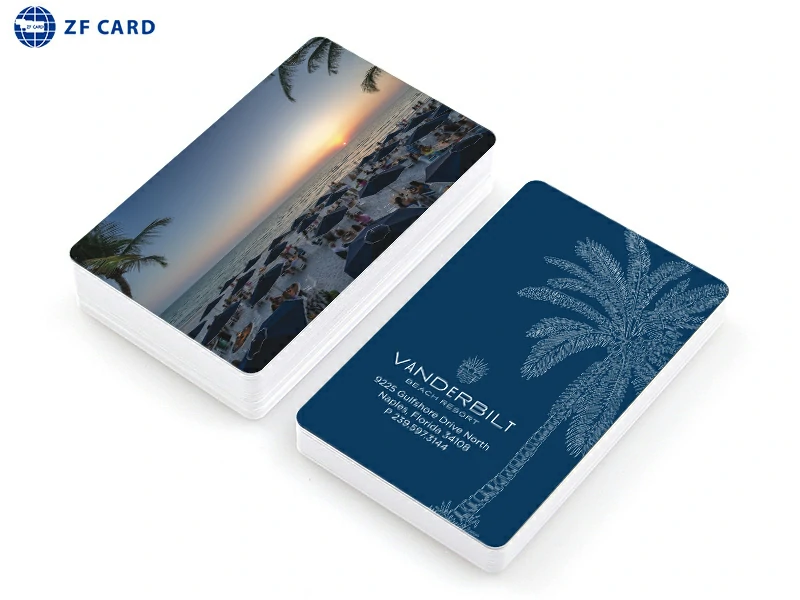
When changing to RFID-based hotel key cards, the project should verify reading, issuance, room assignment, expiration and cancellation with the installed lock system before approving mass production.
The same principle applies to offices, campuses and industrial sites. Confirm every major hardware variation rather than testing only one reader and assuming the result applies to the entire property.
Compare Total Migration Cost
Comparing card prices alone can produce the wrong decision.
Current Magnetic Stripe System Costs
The existing system may involve:
- New card purchasing;
- Replacement cards;
- Re-encoding;
- Reader cleaning;
- Reader repair;
- Failed-swipe support;
- Security or reception assistance;
- Disruption caused by unreliable access.
Some of these costs may be low or infrequent. Others may occur repeatedly across many locations.
RFID Migration Costs
An RFID project may require:
- RFID cards;
- Reader or lock replacement;
- New encoding or issuance equipment;
- Software configuration;
- Credential database changes;
- Compatibility testing;
- Staff training;
- User reissuance;
- Parallel operation during rollout;
- Temporary operational disruption.
A practical comparison can use the following structure:
Total project cost = card purchasing + card replacement + reader maintenance + system upgrades + issuance equipment + software configuration + support labor + migration disruption
The purpose is not to prove that one technology is always cheaper. It is to compare the cost of continuing the current system with the full cost and operational value of changing it.
Keep, Replace or Phase: Which Path Fits Your Project?
Keep Magnetic Stripe
Continuing with magnetic stripe cards may be reasonable when:
- Existing readers and locks remain reliable;
- Failed reads and maintenance are manageable;
- The application only requires basic identification;
- The risk level is relatively limited;
- No wider access-control upgrade is planned;
- The migration cost is greater than the current operating problem.
This does not mean that magnetic stripe technology is preferable in every situation. It means the installed system still meets the project requirement at an acceptable cost.
When replacement cards are ordered, ZFCARD can manufacture magnetic stripe cards around the verified interface, stripe requirement, card construction and personalization needs of the existing system. The specification should be based on a confirmed card sample or system requirement rather than appearance alone.
Migrate Directly to RFID
A direct migration is usually more practical when:
- The project is building a new access system;
- Readers or locks are already being replaced;
- Entrances handle frequent traffic;
- Magnetic reader maintenance has become disruptive;
- The current credential no longer meets security requirements;
- Issuance equipment and software can be updated together;
- The project can define one target RFID credential.
Direct migration reduces the length of time that two credential systems must be managed in parallel. However, it requires the project to coordinate hardware, software, cards and issuance before deployment.
Use a Phased Migration
A phased migration is appropriate when the entire infrastructure cannot be replaced at once. This may apply to:
- Multiple buildings;
- Several hotel properties;
- Different floors or departments;
- Large numbers of installed locks;
- Sites that must remain operational throughout the upgrade;
- Projects that need a pilot before wider investment.
A phased approach should still have a defined target system and completion plan. It should not become an indefinite arrangement in which both technologies remain active without clear control.
Plan a Controlled RFID Pilot
Before replacing cards across the complete system, test the target RFID credential in a limited but representative part of the installation.
Select a Representative Pilot Area
Choose an entrance, floor, building or property that includes the equipment and operating conditions most likely to appear in the wider rollout.
A pilot based only on the newest reader may fail to identify compatibility problems with older equipment elsewhere.
Test the Complete Credential Process
The pilot should verify:
- Card reading;
- Credential encoding or issuance;
- Permission creation;
- Access approval and denial;
- Credential expiration;
- Lost-card revocation;
- Replacement-card issuance;
- Performance across different reader or lock models;
- Printed information and numbering;
- Staff operating procedures.
The project should also confirm that the selected card construction and personalization do not interfere with the required technical function.
Define Success Before Testing
A pilot is more useful when success criteria are established in advance. These may include:
- Reliable reading across the selected equipment;
- Correct credential issuance;
- Successful access revocation;
- Acceptable user flow;
- Manageable staff procedures;
- No unresolved software or database conflicts.
The result should determine whether the target specification is ready for rollout or requires further adjustment.
End Legacy Access and Record the Final Specification
A migration is not complete simply because new RFID cards have been issued.
Revoke Replaced Credentials
As users, rooms or locations move to the new system, the corresponding legacy credentials should be removed according to the project’s access-control policy.
Otherwise, old cards may remain recognised by active readers even after users have received new credentials.
Set an End Date for Parallel Operation
A phased rollout may require both technologies to operate temporarily. The project should define:
- Which entrances continue to accept magnetic stripe cards;
- Which user groups have received RFID cards;
- When each rollout stage ends;
- When remaining legacy readers will be removed or disabled;
- When old credentials will no longer be accepted.
Without an end condition, parallel operation can increase administrative workload and preserve the risks that the migration was intended to remove.
Create a Reorder Specification
After the system is approved, record the final specification for future replacement and repeat orders.
The record should include:
- Card technology;
- Communication interface;
- RFID frequency;
- Chip or credential requirement;
- Credential format;
- Card material and dimensions;
- Artwork version;
- Numbering rules;
- Encoding or personalization requirements;
- Approved physical sample;
- Compatible reader, lock or encoder models.
This prevents future orders from being based only on an old invoice, card photograph or incomplete product name.
What to Confirm Before Ordering Cards
Before requesting samples or approving production, collect:
- Reader or lock brand and model;
- Current card sample;
- Communication interface;
- Current credential format;
- RFID frequency and protocol, where applicable;
- Magnetic stripe specification, where applicable;
- Encoder or issuance device;
- Access-control or hotel lock software;
- Required quantity;
- Usage environment.
The final card specification should identify:
- Card type;
- Communication interface;
- RFID chip and frequency, where applicable;
- Magnetic stripe requirement, where applicable;
- Card material;
- Size and thickness;
- Printing artwork;
- Numbering;
- Encoding or personalization requirements.
ZFCARD offers customizable RFID cards, but the chip and credential configuration must match the equipment used by the project. Card design and surface finishing should be finalized only after technical compatibility has been confirmed.
Do not approve mass production solely from a written comparison. Test representative samples with every relevant reader, lock and issuance process used by the project.
Conclusion: Choose a Migration Path, Not Just a Card
Keep magnetic stripe when the installed system remains reliable and the cost of upgrading exceeds the current operational problem. Migrate directly to RFID when developing a new system, replacing readers or addressing frequent access, maintenance or credential-management requirements. Use a phased migration when equipment, locations or users cannot be transferred at once.
The correct decision in an RFID card vs magnetic stripe comparison is not simply the credential with more features. It is the migration path that matches the installed equipment, required security level, operating conditions and total project budget.
FAQs
Can RFID and magnetic stripe systems operate at the same site?
Yes. Separate RFID and magnetic stripe readers can operate within the same facility during a controlled migration. The project should define which users and entrances belong to each system and set a date for ending legacy access.
Can existing artwork be reused on RFID cards?
The visual design can often be adapted, but artwork approval does not confirm technical compatibility. The RFID chip, card construction, numbering, encoding and printing process should be verified before reusing the design.
Should RFID cards be encoded before delivery?
That depends on the issuance workflow and security configuration. Some organizations issue credentials through their own equipment, while others require prepared data. The method should be confirmed before production.
What happens if a site uses several reader models?
Each relevant model should be included in sample testing. Compatibility with one reader does not prove compatibility across every entrance, lock or property.
How should unused legacy cards be handled?
Access permissions associated with unused or returned cards should be removed according to the organization’s credential-control policy. The cards should then be stored or disposed of under the project’s security procedures.