

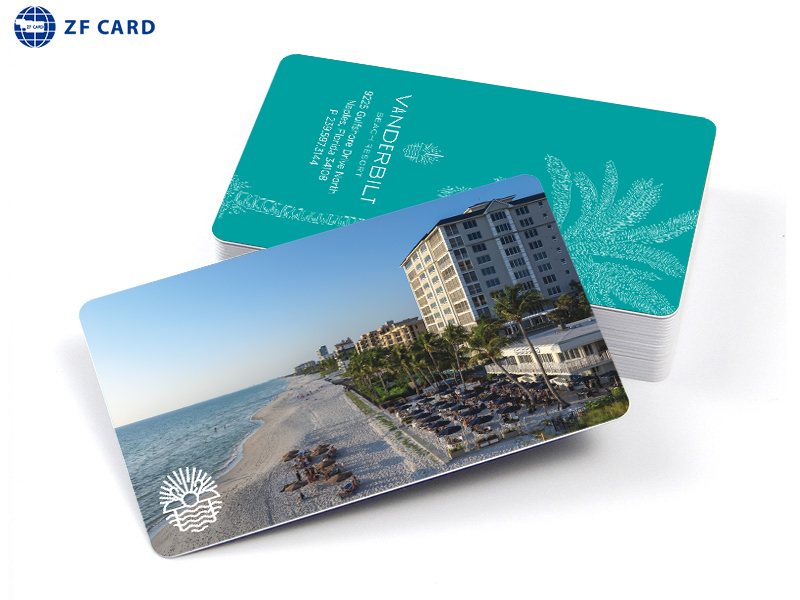
RFID cards and NFC cards communicate through radio waves without physical contact, but the terms cover different ranges of technology. RFID includes cards using various frequency bands and communication protocols. As GS1 explains, NFC belongs to the broader RFID family and operates at 13.56 MHz for close-range communication.
These differences explain how each type of card communicates. Whether a particular card works with a reader, phone, or access system depends on card specifications and system requirements.
What Are RFID Cards and NFC Cards?
RFID stands for Radio Frequency Identification. An RFID card contains a chip and antenna that communicate with a compatible reader through radio waves. Frequency and communication protocol vary according to the card’s application.
NFC stands for Near Field Communication. An NFC card uses 13.56 MHz NFC technology to communicate with a compatible device at close range. “NFC card” does not identify a single chip or data format. Features depend on the card’s specifications.
What Are the Key Differences Between RFID and NFC Cards?
NFC cards fall within the broader RFID category. In the comparison below, “RFID cards” describes the broader range of cards, while “NFC cards” identifies cards intended for NFC interaction.
| Feature | RFID cards | NFC cards |
|---|---|---|
| Scope | Cover various contactless card technologies | Form part of the RFID category and support NFC interaction |
| Frequency | May use low, high, or ultra-high frequency bands | Operate at 13.56 MHz in the high-frequency band |
| Reading distance | Varies with card and reader specifications | Usually brought very close to a compatible device |
| Smartphone reading | A phone’s built-in NFC function does not read 125 kHz or UHF cards | A compatible phone may detect a card; access to data and functions depends on card and application support |
Frequency and Protocols
RFID cards may use low, high, or ultra-high frequency bands. NFC cards operate at 13.56 MHz in the high-frequency band. To communicate, a card and reader need to support the same frequency band.
A shared frequency does not establish compatibility on its own. Cards and readers operating at 13.56 MHz may use different communication protocols. The NFC Forum’s technical overview describes several card and device technologies that NFC devices may support. Protocol support affects whether a reader can communicate with a card. An application may also require a particular data format or card function.
Reading Distance
RFID and NFC cards communicate without touching a reader. An NFC card is usually held very close to a compatible device. RFID cards can also work at close range, but usable distance varies with card technology, reader, antenna design, and surroundings.
Smartphone and Reader Support
A phone’s built-in NFC function works with supported 13.56 MHz cards. That function does not read 125 kHz or UHF cards. A phone may detect a compatible card without gaining access to protected data or completing an action required by an application.
A similar distinction applies to dedicated readers. Detection shows that some communication occurred, but an access, payment, or other system may still reject the card.
Can an NFC Card Work With an RFID Reader?
It can, provided the reader supports the card’s frequency and protocol, and the application system accepts its data and authentication method. An “RFID reader” label does not specify which cards a device supports.
For example, a door reader may detect an NFC card yet refuse access because the card lacks a credential required by the door system. To assess a replacement, check supported card types and credential requirements, then test the proposed card with the reader and application in use. Detection alone does not confirm that a system will accept a card.
How to Choose the Right Card for Your Application
Begin with the action a card needs to perform. A hotel key card must work with the property’s lock and encoder. An access card must meet requirements set by installed readers and the access system. For phone interaction, identify the phones and applications involved, along with the data each application needs.
Use those requirements to specify frequency, chip, protocol, encoding, and authentication. Once technical specifications are clear, decide on material, printing, numbering, and other personalization. These choices also apply when ordering custom contactless IC cards. Card construction and appearance can then follow the intended function.
Before a bulk order, test a proposed card with the equipment and application where it will be used. Testing should confirm the required action, such as opening a door or displaying intended information on a phone.
Conclusion
RFID covers contactless cards using different frequency bands and protocols. NFC sits within that category and uses 13.56 MHz technology for close-range interaction. This is the central difference between RFID and NFC cards. For a particular card to work, card technology and application requirements must match the reader and system.
If you are sourcing cards for an existing system, contact ZFCARD with the reader or lock model, specifications of a working card if available, and printing or personalization requirements to discuss suitable card options.
Frequently Asked Questions
Can a smartphone read every RFID card?
No. A phone’s built-in NFC function does not read 125 kHz or UHF cards. It may detect a supported 13.56 MHz card, although detection does not necessarily provide access to protected data.
Do hotel key cards use RFID or NFC?
A contactless hotel key card falls within the RFID category. Some hotel cards also use technology that can communicate with NFC devices. That capability does not confirm whether a phone can access card data or whether one hotel card can replace another. Suitable replacements depend on lock, encoder, and system requirements.
Is an NFC card more secure than an RFID card?
Neither name establishes a security ranking. NFC cards belong to the broader RFID category, and security capabilities vary among individual cards. Assess the chip, authentication method, and system configuration for each option.